Sunday, January 9, 2022

Smoked Indian teas, Niroulla Darjeeling and Ketlee Manipur


Niroulla Darjeeling left, Ketlee Manipur black right


I won't add much intro about these; they're smoked Indian black teas, provided by the Lochans for tasting (the Niroulla) and also by Susmit of Ketlee.  Many thanks to them!  To me warm toned teas are a nice winter theme, so I guess this relates to observing winter, even though the weather here isn't on that page.  

It's been in the low 30s lately / low 90s F, so summer weather everywhere else, even though it's supposedly the end of our cool season, or maybe the start of the hot season now, not that it matters.  It feels cool to me anyway because it's breezy and not humid; I went to a water park with the kids yesterday and it felt a little cool out, at roughly that same temperature.


Niroulla's Smoky Wonder Black Tea (a Tea Swan outlet link, to a 2020 2nd flush version, with this 2021)


This hand-picked fresh leaves from the terrain of Darjeeling during the second flush is a wonder wrapped in your cup! The tea leaves are processed through the pine smoke chamber to get the smoky aroma and flavour. Having the air-filled around you with the aroma of delicate fruity notes, Niroula’s Smoky Wonder black tea tastes smoky and fresh! 


Orthodox Smoked Black Tea

Orthodox Village Style Smoked Black tea from Manipur. [I think it's that]

Processing : This tea is handpicked, withered, hand-rolled, oxidised, sundried and then smoked in forest firewood. The rolled leaf will not be fully sun dried and the complete drying will take place on top of the kitchen fireplace for several days until the desired smokiness level is achieved... 

Taste : Smoke, muscatel, raisins, peppermint...

Grade : Wild Gushu Spring Harvest 2019


I always take gushu (plant age) claims with a grain of salt, but if old plant forest based sources are used some would be older, or maybe all the material could be.  I suppose it's possible that this is a related version from a different harvest, or it could be something else, but it's probably close to that.  If it's a similar but different version the description probably wouldn't match.


Review:


Niroulla left; it came across as much lighter, matching the color difference


Niroulla Darjeeling:  not all that smoky; in general I expected the opposite concern, although the smoke scent is a lot weaker in this dry tea version than the other.  It would be possible to miss that this is even a smoked tea.  The overall experience is pleasant, and positive, just not overwhelmingly so related to complexity and balance of the tea.  Quality seems generally good; not much for flaws stands out either.  There is just a lack of distinctness to the experience, not much jumps out at you beyond a general earthiness.  

Sweetness level is ok, and flavors that are present are fine.  For a breakfast tea this would be fine, well above average.  I think sometimes a lot can get missed related to the range within which I'm evaluating teas.  Compared to a loose Twinings English Breakfast tea this is on another level, that much more positive, complex, and refined.  I suppose comparing it to a Twinings Lapsang Souchong might make sense, but it's not as if I have either profile in mind, so I can contrast or match up aspects.  I've not drank Twinings teas in a few years, and don't plan on resolving that to re-establish a baseline.

Some general fruitiness stands out beyond the very light smoke input.  It's not exactly clearly in any one range, a bit non-distinct, but towards citrus or maybe dried fruit, or maybe both.  For "dried fruit" maybe dried cherry and tamarind, so including some complexity.  Really that description as an aspect list sounds good, and the tea is pleasant, it's just limited in how it all comes together and comes across.  

For sounding a little negative about it I should clarify that I'd describing it using really exceptional Indian and Chinese black teas as a baseline threshold.  This is better than a generic Darjeeling tea bag tea, for sure, but really good versions of better Darjeeling (or Assam, or from elsewhere) are two full levels beyond that.  This doesn't quite make it to that highest level, the range where very positive aspects stand out, and overall complexity, and refinement is great, all experienced without notable flaws.  This lacks the flaws, and complexity isn't bad, a good start.  A touch more smoke really would've blotted out experiencing the rest, so that would be a significant trade-off, but it would match my expectations better.  Of course one infusion in is too early for a final judgment.


Ketlee Manipur:  there's that punch of smoke.  For people not into smoked teas it would be just awful, like leaning over a campfire, but for people on that page it's never clearly enough until it's too much, and this isn't there yet, not too much.  I think they nailed it for smoke input level.  It's not like I'm a smoke expert but at a guess this is pine smoke; it has that nice sharp edge to it.  I suppose other tree wood could also lend that.  My grandfather smoked a lot of food and he would never use pine, instead maple, cherry, or hickory, and those all provide really nice range for smoking foods, and would've worked well for tea.

It's going to be harder to identify what is going on beyond the smoke, which is fine for me, since it's kind of the part of the experience I'm signed on for.  My impression is that the tea base is good, that they didn't cut any corners on what they used, although to an extent they could've and it wouldn't change much.  No flaws stand out, no noteworthy astringency, or thinness of body, or off flavor aspect.  Richness and depth is good.  

Flavor range seems to add more of a warm mineral and toffee note than for the other, which is lighter and more into fruit.  Feel is definitely fuller, but it might give up a bit of sharp feel edge, a light astringency dryness in the other.  The other is so soft and balanced it's wrong to say that without adding context; I'm still talking about the range of very good tea, not how chopped leaf versions come across, and that astringency level and version is positive.  It doesn't cross my mind to see if a splash of milk will counter that aspect in the other, because it lends a fullness and structure to the tea, not a harsh edge.

Kind of a strange idea I've been encountering these days, mixing these two teas they might be better than either alone.  Ordinarily I love the distinctness of narrow aspect types of teas, for better and worse for balancing a broad range of aspect inputs, but the smoke and richness in the second version and light edge and fruit in the first might work together.  Oddly the second is just as sweet, not a direct match to other descriptions, but it's easy to miss that for how the heavier savory smoke input shifts interpretation.


I just did try mixing them; in terms of balance and complexity it's better, but it does come across as muddled for blending too much range together.  In a sense that failure to be better is comforting, reassuring a general perspective about teas I most typically only hold as an assumption, even though I've been discussing it a lot lately, about blends versus narrower origin and aspect versions.  I suppose them mixed together is more like what any tin of smoked black tea would be like.


Niroulla left


Niroulla, second round:  the smoke is essentially gone, not that it was so clear that it was present initially.  This tea is better this round; the fruit really shines through.  Citrus might have picked up a bit in the balance of the fruit.  Astringency edge is just different, not more or less, and a touch of woodiness enters in, but the overall balance is nice.  Judged as a smoked tea it's just not like that this round, but it's quite good.  This would be especially good as a tea type to have with food, the way that fruit and sweetness could link up with a food input, or counter it, with the light astringency edge just perfect to clear your palate.  

Tea and food pairing isn't necessarily one of my things but I just tried an orange cake (like plain cake with marmalade on it; kind of odd but nice) along with a Shui Xian, an inexpensive version from that one local Chinatown shop I always go to, Jip Eu, and both were fantastic together, much better than either alone.  I think that worked much better for the tea containing no citrus trace, just countering it well, with the overlap between this Darjeeling and that marmalade probably not working out as well.  With this being so sweet it might pair well with something that's not quite as sweet.


Ketlee Manipur:  it's cool how the smoke effect shifted in this, but it didn't really diminish.  If anything it's slightly stronger, reminding me of the scent of coal or charcoal.  The balance is still ok, with a lighter, twangier smoke edge replaced by this deeper smoke range, just with less coming through from the tea.  Back to the pairing idea, this would be perfect with something sweet, for adding contrast, maybe something like a chocolate cake with a creamy frosting, or a raisin danish.  I think the connection between that wuyi yancha oolong and the orange flavored cake related to the inky mineral tone pairing really well with citrus sweetness, and that this probably wouldn't offset that orange cake in a comparable way.


Conclusions:


Both nice, both very different.  I'm wondering where these stand in relation to a smoked Gopaldhara Darjeeling I tried half a year ago, but of course I don't have the memory to place that.  At a guess that was closer to this Darjeeling version but with slightly heavier smoke.  I never did get much of a read on the tea input for the Ketlee Manipur version, but again for liking smoked teas with smoke a bit heavy that seemed fine.  That's what they're about.  If it's too strong aftertaste gets to be a bit too much, and this Manipur version didn't go that far.

Judged as a fruity, balanced Darjeeling version the Niroulla works better, versus representing a typical smoked tea.  It may be that they intentionally backed off the smoke level to allow that tea quality and character to shine through, which makes sense, given how good the tea was, and for it being a bit on the delicate side (or refined, to add a more positive framing).  It balanced.


Tuesday, January 4, 2022

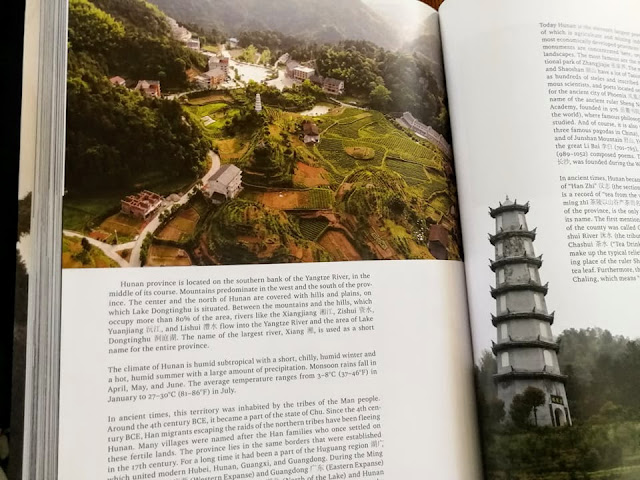
Geography of Chinese Tea (book review)


This is a great reference on Chinese tea background.  It's by Sergey Shevelev, the founder of Moychay, probably the main Russian tea vendor, and developer of a series of tea clubs (not exactly like a cafe).  Sergey talks about the book, about what went into it, and what it means to him, in this video gathering description (which seems more about talking through a tasting session, to be clear; I mention it more to bring up the video theme and location).  There are more book details here.

Sergey has been a very positive and helpful tea contact for awhile, and I helped do a final read-through of this text, and Moychay sent some teas in thanks, so in a sense I'm not impartial.  Maybe hardly anyone ever is completely objective about almost anything they experience, but that's leading into a different set of concerns.  To me I seem to have no problems at all communicating exactly the same thing I would based on a different connection context, or a complete lack of one, but who knows.  This post might go a bit far in the opposite direction, describing what I see as limitations in the work, which are more about scope choices and related to which interests it applies to, since I thought the content was quite good. 

It's interesting comparing and contrasting this topic scope with another tea text I did a late-stage editing read through for, Tony Gebely's Tea:  A User's Guide.  It really helps place what this about, the range.  Both are quite good texts, I think, both very informative, detailed, and well-grounded, but the scope covered is quite different.  There some overlap related to some tea processing and types information, but in general that text is all about user experience of and approach to tea, and this is about deeper background context than most people would ever encounter.  

This book is mostly about tea types, plant type inputs, locations, history, regional geography, processing steps, and so on, of course mostly limited to China, with some coverage of Taiwan, which may seem to overlap or be completely separate, depending on the subject being considered.  For tea it overlaps.  Since it mentions a lot of natural spaces, parks, and tea oriented landmarks in different places it overlaps with what a tourist in China focused on tea would seek out and experience.  It's not as much about related legends, which do come up here and there, so some main ones are included, but there is more about that non-fiction background.  It doesn't really cover brewing approaches, ceremonial aspects, or teaware either, at least some of which Sergey mentioned in that video cited as being covered in a separate text still under development.


Sergey making pu'er (he's the one on the right)


It's funny how much there is left to cover, given that.  It runs long because it doesn't stop at describing the best known areas and types, and ventures on to geographical descriptions and processing steps.  The first 50 pages is about tea culture and historical background, with a bit on tea plant compounds (which does overlap with Tony's book), but the rest of the overlap with Tony's reference is really with a lengthy list but abbreviated depth description of tea types, with this going a lot further on what those are and how they are produced.


Pictures tell a lot of the story; clear and impactful images of the famous and not as famous tea growing areas really fill in a sense of those places.  Then images of the actual teas and processing steps also round out a little on what a broad range would be like, venturing into tangents like aging background, as is relevant to the type being described.  History of every area gets detailed treatment.  

I suppose that means this book wouldn't be for everyone, going the extra couple of layers deeper beyond what tea experience itself is about.  Tea processing is a fascinating subject to me, but even that only goes so far in informing the actual experience, and less so the history.  For a range like oxidation level background it does apply to experience, because the text talks through what the most conventional styles are like, with less on what other variations and style interpretations might be like.  I don't mean just for Tie Guan Yin, pu'er, or Dan Congs, I mean for a very broad range of popular teas from across China, some of which aren't very familiar in "the West."


even for the more familiar historical sub-themes the extra details are is still interesting


In describing what works best about Sergey's communication about teas in the past I've always mentioned that he is a true tea enthusiast, in addition to being a vendor, with that other natural focus on the commercial side.  No doubt the history and background was always fascinating to him too, and this book represents ideas collected over many years and visits to China (at least 10, he mentioned), ideas which were previously only brought up in narrow scope video content.  He has long been a student of Chinese language, which might work as a general cut-off for how far someone tends to take dedication to the range of subjects.  

On the opposite side, for people who are bad with languages, not going there and not studying Mandarin doesn't seem to represent a gap or lack of commitment.  I was a lot more open to foreign language studies earlier in life myself, studying French, Spanish, and Sanskrit in academic circumstances, and now my Thai is still fairly limited even for living in Thailand for 14 years.  I suppose that partly relates to the added difficulty of moving beyond Latin based languages; learning Devanagari--traditional Indian language script--to study Sanskrit came a cost to me, and pushing through different language forms and structure seemed a bit punishing, and didn't go well.  Or maybe my brain is just less plastic now?  Hard to say, but it seems to relate as much to motivation level.


One part of how this approaches describing teas stands out as what some would interpret as a strength of the work, and others a weakness.  It describes type-typical experienced aspects in specific tea versions, or I suppose more accurately as one relatively typical version might be interpreted.  That's great, for passing on a sense of what a type might be like.  For people looking for gaps, with a negative bias, it could seem to introduce error, since any given type occurs as a broad range of exhibited aspects, with the "type-typical" theme only being so narrow.  

I don't see it as problematic describing that.  Any text would trip over itself trying to describe exceptions to every generality or a more complete flavors / taste / aroma range, and typically skipping that makes the most sense, to me.  One tea expert in particular comes to mind in mentioning that, an old favorite blog based reference who started discussions and an answer to every question with "it just depends," using half the answer content space to address context and range of exceptions.  To me that approach works too, since the placement of ideas and discussion limitations are also interesting, but not to cover this much scope.  It works better in a short passage to emphasize limitations, talking around and placing a narrower idea range, than to go through that over and over in a long text.

For the tea history, area descriptions, about type ranges, and general processing descriptions it's not as relevant anyway; it comes up more in discussion of aspects of types as a sensory experience.  This work passes on a sense of a typical experience range, but doesn't try to replace experience, or account for exceptions.  To cite an example of the kind of thing "left out," as a tea reviewer it's interesting to try to identify what I see as "quality markers," what sets apart the best versions of types, but really I think it's best to not venture into that subjective a scope in a broad work like this.  The other text on tea I mentioned, Tony Gebely's work, made the same scope decision to focus on general types descriptions, and not get swept into what separates quality levels, which again I think is for the best.

As I keep encountering more and more detailed tea background, and talking to vendors about processing themes and such, it's harder to find new ground I've not covered.  Half of this text was relatively unfamiliar, because I'm not an expert on how to process teas, and I've encountered a lot more about main tea areas than others (eg. Wuyishan and Yunnan, versus entire broad regions that I wasn't really clear on covered in great detail in this).


One might wonder, if a lot of Chinese people really do drink ordinary quality and relatively "generic" tea (an idea that comes up, which matches my experience), how is it possible that there is so much detailed background available on such a broad range of areas and types?  This seems to be a look into what informed locals would know and experience about their own area, types, and history, or that degree of coverage plus a bit more.  We are already exposed to some of that in those places I mentioned, Wuyishan (a Fujian area) and Yunnan (a whole province), but Chinese tea history doesn't end at those sorts of better known areas.  I don't just mean related to hei cha and a few more types of green and black tea either, and yellow tea; there is a broader and deeper still-living culture and history to be explored.

One might wonder if it wouldn't feel incomplete, like a gap, to hear about another dozen or more types of teas--or maybe 50, or more--and to not experience them, to only encounter them as ideas and description.  Sure, I suppose it could.  Also this treatment may not be as interesting for people who tend to narrow in on one range of teas they like and leave the rest aside the broad background exploration theme.  There's nothing wrong with only drinking oolongs, or sheng pu'er.  This book is mainly for people who like the background of tea in addition to the experience of it, although it could be used differently, for example as a narrower reference for specific types, or as an intro to the theme of tea processing.

For being a relatively long book, 511 pages, this isn't a difficult read though.  Again pictures tell a lot of the story, so actual text is much more limited, and it being separated out by broad and then narrower geographical areas make it approachable and much easier to read.  

For people into texts as a reference in general, and to the scope I've outlined in particular, I would definitely recommend this book.  As with most people I tend to consume more content related to shorter online videos myself, but there are different strengths and limitations related to the two forms.  It would take many hours out of a year to get to this much detailed content online, and one never would run across all of these same ideas, across any exploration time frame, not even a decade.  

On the Chinese language internet that may be more practical, but English Western web text or video sources just aren't that readily available, detailed, or complete.  Sergey's Youtube videos are a nice exception, or Farmerleaf's, and TeaDB is a good video blog, and the Tea House Ghost channel a nice reference, but all of these only treat one narrow and typically more conventional topic in short videos, with substantial focus on practical advice and perspective.  They just can't explore the tea history, geographical input, processing, and types descriptions from many main regions in China in the same way this text does.

Friday, December 24, 2021

Christmas, revisiting the Bangkok Chinatown


My wife and I went to Chinatown to buy some Christmas gifts, per usual just a couple of days before Christmas day.  I made two quick stops in familiar tea shops, and bought some tea, but it wasn't mostly about that theme.  I'll pass on what the Bangkok Chinatown experience and feel is like these days, more or less at a low point in between covid waves here.  Omicron should probably pick up and cause us to close contact back down over this month but so far that hasn't happened.


at the subway / MRT ready to put in some kilometers, how Chinatown works out


It was great to be back there.  Logistics for visiting that one shop and the owners I really feel a connection with weren't ideal, because we had to walk a few blocks in the wrong direction to get there, and then to walk back.  It was a little strange going in there and saying that I couldn't stay, buying some tea in a rush versus visiting, then moving on to sorting through blocks of local warehouse market style shops, with some walking in the middle.  


the owners of Jip Eu, my favorite Chinatown shop


The tea was nothing special, just some low cost Shui Xian that I could buy for a number of gifts without spending much on it.  Those were around $3, and probably 200 grams of tea each, although maybe that's not right.  I bought enough one is for me, so I can taste it and see how moderate the quality level really is.

At the end of the rushed path I stopped at a second shop and bought a couple of Dayi sheng pu'er tuochas and some Thai oolong, mostly for one monk who I give tea to who loves rolled oolong, with one of those tuos for me.  I had bought an older Xiaguan version at the first store, one I've reviewed a couple times here; it would be interesting comparing the two.  I think I'm pretty clear on how that would go but it would still be interesting.


I bought some inexpensive Thai oolong at Sen Xing Fa as well, near there


Chinatown isn't dead, at all; it was nice contrasting that experience with visiting Pattaya not so long ago, which is really struggling.  Half of all the businesses in Pattaya have closed over the last year, and bars there are lucky to have some patrons in them to offset costs with some revenue.  We went there because my wife was taking a short training course on how to cut hair, one more odd and likely pointless venture on her part.  Since the kids go to school online and I work online in a sense we can do that from other places, and Pattaya is just a 2 or 3 hour drive away, with some hotels there quite inexpensive at this point.

Chinatown had lots of people eating in outdoor cafe themed restaurants, like a hybrid version of street food dining.  The wholesale oriented shops and market spaces we visited were as crowded as ever.  If it felt like the risk of covid was high I suppose that might've been uncomfortable, even though essentially all of it was outside, or only related to stepping into an open shop briefly.  We did eat in one enclosed restaurant, in Hua Seng Hong, which isn't something we've been careful to avoid over the last few weeks.  Covid stats are pretty low right now, and of course my wife and her mother and I are vaccinated, a process that ran so late that our booster requirement isn't quite timely just yet.


foot traffic picked up later


Thailand just matched the US for vaccination rates over the past two weeks or so, so likely has pulled slightly ahead now.  I just checked that; Thailand has 63% fully vaccinated, and 72% with at least one shot, with the US at 61 and 73 respectively, so nearly even still (with Thailand's stat counts running a few days behind in that Google dashboard).  I probably should skip interpreting what I think that means here, since to some extent it's all anyone's guess at this point.  It must help, having more people partly protected.

There aren't that many tourists in Chinatown compared to Thais.  One might wonder if I can reliably tell the difference, since a tourist from any Asian country could look Thai to me.  I can tell whether someone is speaking Thai or not if I'm overhearing them, but of course I was going mainly by appearance of the hundreds or thousands we walked by.  We might've saw a few dozen "Westerners" over a few hours, including on the subway to get there, nothing like the normal pre-covid case.

It was nice feeling that free, to just be there.  I had missed the smells and the feel of Chinatown.  It's never completely routine to me, always a little like I'm on vacation, even if I'm visiting there every other month or so.  We stocked up on chrysanthemum but didn't really buy much for my wife or I, besides very little tea.  


It's not an ideal place for Christmas shopping for an 8 and 13 year old but we found some interesting things, toys, inexpensive jewelry, and clothes and such.  The night before we checked out a department store, to buy a purse I think Kalani will like, and after visiting Chinatown we crossed Bangkok to a sporting goods store to buy them snorkels, something they've somehow never got around to trying out.  Christmas will be ok.


Later update:  for the kids being 8 and 13 we're at turning point for Christmas not being the same, and they helped exaggerate that by waking up at 5 and starting Christmas without us, opening almost everything on their own.  A year or two earlier I would've been disappointed, but now it just is what it is, at the end of their experience of such things, at least that earlier form.  Kalani is onto how the Santa thing works, even though she maintains the pretense out of respect and hopefulness.

The did love everything.  By far their favorite gift was a 300 baht / $10 Roblox gift card, which my wife didn't want to give them, because them playing games and watching videos instead of joining online classes has been a huge problem for over a year now.  It's what they wanted though.


We were that close to skipping Christmas, since if we had went on a planned trip to Chiang Mai almost none of those gifts would've worked out, and the only decorations we experienced would be in malls and a hotel lobby.  I'm glad we did it, that we changed plans to put emphasis on that holiday experience form instead.  I skipped a dinner outing to put up a tiny (very tiny!) Christmas tree, and to wrap everything, listening to those old "crooner" carols, and it was nice for me to think it all through again too.  Christmas here has never been a match for the old, traditional form I experienced in rural America (PA), but it's nice that we could give them as much of the experience as we could manage.  


Christmas at home 5 years ago; covid prevented planned visits for the past two years


It's funny how every year it seems new to my wife, who is Thai, that each time she asks how many gifts I think they need, and how things work out with Santa giving things and also us.  Her take is that she hopes this is the last time we need to go through this same form of the experience, and unfortunately she is partly right about that, that a 9 and 14 year old will relate the experience differently.


Merry Christmas to all readers!  I hope that your life has a bit of extra magic in it, and that if it's not these traditional forms then it's something else that helps you connect with a feeling of hope and positive reflection.  Everything is ok, and it's going to be ok, even when parts aren't working out.


of course the Charlie Brown Christmas special came to mind setting up that tiny tree