Showing posts with label Tea Masters. Show all posts

Thursday, July 1, 2021

Talking to Stéphane Erler of Tea Masters


Ralph had a schedule conflict


We've talked to some interesting and amazing people as a part of that social meetup series but this moved on to someone I consider to be a tea expert.  No one is a deeper-level expert than someone with half a lifetime's experience in making tea, or a background in helping found a unique nation-specific tea tradition, as people we've talked to. But the conventional sense of someone putting in long years of study, training, and communication, first learning and then giving back to a well-grounded local tea tradition, all evokes a unique type of respect.

For people exploring tea a decade ago Stéphane Erler would've needed no introduction; Tea Masters was one of those classic blogs that helped define tea experience and culture.  And it still is active; that's unique.  I suppose the multitude of social media channels and the current high level of focus on pu'er as a preference end-point might've diminished that standing, as being one of relatively few points of focus, but not as I see it in relation to the solid foundation and value of the reference.  

I'll add a short introduction here of who I see Stéphane to be, and a bit on how he came across to me (we've never spoken by video call before now).  Then this will move on to a set of tangents, for the most part topics we only barely touched on.  These meetups have evolved to be more personal introductions than explorations of tea themes, which is fine.  When a participant has so much to offer about a subject matter, spanning the entire Taiwanese tea tradition in this case, or how Wuyi Yancha is produced and sold, in an earlier example, it can feel like not much was covered for dwelling on personal background, but those life stories and details ground the rest.  There is no tea tradition without complex individuals having and sharing the ideas and experiences.

I don't have a good intro for Stéphane handy, and didn't turn up one in his own words on his Tea Master's blog or Youtube video channel, or on his blog Facebook page (with his vending page here).  Somehow that seems appropriate and positive, that there is no main 50 word summary version out there.  This will mainly draw on my own impression then.  With some positive bias, kind of a given, but I think that's fine, and warranted in this case.  His own words in a recent blog post about blog anniversary context at least clarifies the context:


This weekend, my live video tea classes on FB will be about gaiwan, gaibei and zhong! It's the Absolute Beginner's tea vessel! As we are approaching my blog's 17th anniversary next week, I thought it would be fitting to mark the occasion by learning more about this fantastic tea vessel. It's the brewing vessel for beginners and experts alike. It's a reminder that despite the years of learning, we remain Absolute Beginners in front of tea.  ...[here posted] on my YouTube channel. 

Honestly, I had no idea that tea blogging would turn into such a long undertaking and a new career for me. It has allowed me to be a 'stay at home dad' and take care of my kids (with my wife) every day for the last 17 years. I'll be forever grateful for interacting with so many kind, knowledgeable and passionate tea friends over the years.


And that captures what I would cover for character, that he comes across as very knowledgeable, able to communicate about different levels of practice and exposure, and as very humble.  To me this continual student of tea perspective captures the positive essence of traditional tea culture.  

On to some discussion points then.  We didn't get so far into Taiwanese tea, or brewing practice, or even that local tradition, but some themes we did skim across were really interesting.


The decline of text blogging


Relevant here too, changes in media forms and preference have led to the decline of text blogging, and reading text in general.  It's nice that Stéphane embraces a video form too, which he has for quite some time (starting 15 years ago, although more regular posts started half that long ago).  Watching those first dozen videos could provide an indirect snapshot into modern tea culture's perspective evolution, since there is far less reference content out there from a decade ago and prior than in the last half dozen years.

We didn't reach any end point about what it means that media and content preferences and consumption are changing; it just is what it is.


Penn State tea club 


We didn't spend much time on this either, but due to being a PSU alumni myself I've found it interesting that tea clubs flourished there.  Stéphane was instrumental in supporting that, regularly visiting Penn State to assist with instruction and guidance, surely across a very broad scope.  He mentioned in this talk that there were multiple tea clubs there, covering Chinese and Japanese scope, extending to one being recognized as an "Institute" for also supporting productive research, resulting in research paper output.


I had forgotten the name of a main founder of one such group, and researcher, Jason Cohen, who went on to develop the Gastrograph aroma mapping application and food research company (with more on that in this post).  As with education and business in general the pandemic has disrupted tea events for the past year and a half, which in the context of a club or group whose members "turn over" every four years would really disrupt direction and leadership, beyond freezing the main group functions.


that app is really set up to be modified, definitely not tea specific


Sheng pu'er in relation to oolongs


Experienced tea enthusiasts would each have their own take on the placement of sheng pu'er versus oolong experience, but something Stéphane said linked with what another oolong-range expert once said, in an interesting way.  He said that sheng is naturally a more intense form of tea experience, so that once one acclimates to that range other tea types would seem to lack intensity.  From the perspective of someone who has drank mostly sheng for coming up on four years that rings true(after earlier focus on oolong, as it worked out).  I had always tended to see it as acclimating to bitterness, and then appreciating complexity, and finding aging changes interesting, and then also experience of a tea reaching a peak of character at an undefined age.  Let's unpack some parts of this.

That other oolong expert--who I hope to mention in a meeting summary, but who can remain unnamed here--placed a very similar idea in relation to the "cha qi energy" of sheng pu'er.  She said that to her sheng experience felt a bit harsh and aggressive, not as calming and pleasant as oolong effect.  I don't "get" cha qi experience enough to place that so clearly, but the other range intensity I can relate to.  Even if you flash brew a moderate proportion of somewhat young sheng it comes across as intense, and for the most part that doesn't drop out with age (although for some versions it would).  Even if taste and aroma range diminish older sheng can often still retain a thickness to the feel, or an interesting way that underlying mild mineral tone supports complexity of experience, and so on.

Next it's hard to say if it's a good thing or a bad thing that many people would evolve towards sheng preference over time.  Maybe neutral?  Before skipping on to that point it's worth considering that tea preference in general has shifted to love of bubble tea in a lot of places, including among young people in China and Taiwan (something we also discussed).  They're not the same thing, but there could be common ground, some overlap.  People tend to cycle through flavored teas due to liking strong flavors and familiar range, then to some extent acclimate to milder and more subtle range in oolongs (at some point; exposure patterns vary), and especially in relation to white teas.  Then maybe it is natural to appreciate intensity and complexity over balance and more subtle aspects in later stages.

This could be unrelated, but I recently wrote about developing a form for analyzing tea experience, for documenting it (so form as in record template), and I omitted "balance" from that version:


"Intensity" was listed as a place to put positive notes in relation to aroma aspects (the split between tongue based taste and nasal receptor aroma / flavor isn't described consistently), and in notes related to flaws and limitations in that draft.  It was never intended as a final version; for actual use someone would need to adjust those categories in relation to how they interpret teas.  I don't use any such formal evaluation or note-taking process myself; I made it up for a friend, and then it also works as a thought-model for the parts that comprise tea experience.

We talked a little about gaba teas, and why I dislike the taste of them (or taste plus aroma experience, or however one puts that).  Again, as suggested by a Russian tea enthusiast, he speculated that it could relate to a feel effect, and that gaba oolong--or oolong and black versions--aren't supposed to be strong flavored or intense.  So it could link back to preferring sheng.  He even said that it would be odd if someone loved sheng best and liked gaba oolong too, which I suppose would also work out for silver needle / tips versions, which also aren't one of my personal favorites.  I like Bai Mu Dan better, because that tends to be more complex and intense.

This could seem like I'm implying that a final preference towards higher intensity means something (which really goes beyond a simple infusion strength issue, as I see it).  It is odd that a typical preference cycle moves from relating to flavored-tea intensity and familiarity, bridges to more sophisticated and subtle scope, then potentially often leads back to valuing a completely different kind of intense and complex experience.  How I think it all maps together is too complex for a sub-theme here, so I'll set it aside.


Relationship between Taiwanese teas and other sources as imports


The subject of Vietnam (and Thailand) producing oolong imported and sold as Taiwanese oolong came up.  That's quite familiar to most people who have been following tea themes for awhile.  I first visited Vietnam awhile back, maybe 10 years ago now, and I was surprised to run across a shop and well developed business producing and selling Japanese style green tea.  I thought it was great that Japanese producers supported a fellow Asian country's local industry in that way, linking up to provide growing and process expertise.  Only later did it occur to me that they were producing tea likely to be sold as from Japan, if not in Japan then elsewhere.

The best of the oolong I've tried from Vietnam was better than the best of what I've tried from Thailand, but neither matched what I've tried from Taiwan, even though I've surely never explored the best high mountain teas from there.  In response to asking what inputs led to that, and how good Vietnamese oolong could be in comparison, Stéphane mentioned that since producers from Taiwan are directly supporting processing terroir limitations might restrict final outcome.  William of Farmerleaf just did a video on a related theme about oolong production in Yunnan, and on the oolong processing side here, directly informed by experience from Taiwan.

There are high mountains in Vietnam, in an area I've personally visited in Sapa, but all the conditions would need to come together, that elevation and temperature, relatively ideal climate and micro-climate (local weather and sunlight / shading), soil type, plant type, processing, and so on.  We never really discussed how far an optimum might go, talking around general background a bit instead.


rice fields instead, in the Sapa area (Northern Vietnam)


the focus then was on family travel, not so much tea themes


Beginner's mind


We didn't explicitly discuss this much, but the one thing that stood out the most in talking to Stéphane was how approachable and humble he was.  He seemed to be comfortable talking about what oolong even is (mid-oxidized tea), or going as deep as one would want to go into cultivars, processed tea characteristics, and brewing practice.  

Stéphane said that his own teacher, Tea Parker, emphasizes giving his students tools to keep improving their brewing practices, and presumably teaware experience and ceremonial forms background, but doesn't lay out rigid structure for how to approach or appreciate tea.  That's admirable.  To the extent there is an objective right and wrong to approach to tea that seems right, embracing flexibility and room for preference and experience development.


Given how interesting those briefly skimmed tangents were it would've been nice to hear more about those topics, and related perspective.  Having no structure in discussion is nice for not imposing limits, with the trade-off that if you talk to a Taiwanese tea expert about Indian and Vietnamese teas for half of a short discussion session you end up hearing very little about Taiwanese teas.  It's an odd part to leave out.  But maybe we can meet again, and put more focus on that.  And it's not as if those other themes serve no purpose, for the people joining to place where their own tea experience stands, and for Stéphane to hear a bit about scope he's not experiencing day to day.


Monday, April 26, 2021

Meetup with Gundega Silniece; tea culture in Latvia


credit Suzana; she always takes the best pictures


About yet another social meetup with an online contact.  I've not met Gundega Silniece before in person, a tea vendor based in Latvia.  It was a very relaxed, free-flowing, and pleasant discussion though, as if she was already a friend. It was great getting to know her better, since we hadn't been in close contact through online discussion, but I'm not going to emphasize that part here.  Let's just say that she is nice.

I want to share more about tea culture in Latvia instead.  I've done a number of local area posts about tea culture in different places, in Russia, Poland, Sweden, even Kazakhstan, with this post covering other writing about those and other places, mostly about us visiting a lot of Asia.  This won't be like those posts, not a more comprehensive glance at a local tea scene, or preferences, just extracts from a conversation about those same themes.  

I had considered having Gundega contribute more about her tea business, but she didn't want to use this content as a way to self-promote, to move discussion into more commercial scope.  That's respectable.  And practical; I can't have that much of a Latvian audience.  To check out more background she also has an Instagram account or a local shop sales page.

She did contribute pictures, which I'll mostly add at the end, that tell some of the story, just not more about the context.  Related to this discussion I only had the Zoom-style pictures.  Those didn't turn out as well as screen-capture versions since we experimented with using Teams, the Microsoft version I use for work.  Zoom and Teams are about the same; it wasn't different.


Gundega in her Riga shop


Latvian tea culture


The main interesting part about tea themes there is how hearing bits makes it come across as developed and complex.  I specifically asked her about connection to Russian tea culture, since a lot of the same themes seem to carry over:  an emphasis on both tea and tisanes, an appreciation of Chinese tea culture, and a diverse tea vending theme, which includes a tea club form.  I mean "club" in the sense of a night club, not a cafe, or an interest group, like Tea Masters, which she is also involved in.  That's also an educational institution, and they host competitions; probably all that is familiar to many.

Her answer to that was informative.  They do have different types of cafes and shops there, and also a night-club oriented business.  It doesn't seem as heavily based on the old Chinese social club theme, which in a negative spin resembles former opium dens there, with the version Gundega described more tied to a bar or concert event theme.  How is this possible, one might wonder, that two forms that don't exist in other places can thrive in these two places?  She offered her opinion on that, framed as speculation, not a final answer.

She thought that the form of the local culture in Latvia enabled certain themes or forms of interest to work that wouldn't necessarily work elsewhere.  It had to do with other artistic appreciation, and forms of social gathering.  Fair enough.  Ralph, another member of that group, is familiar with club scenes and outdoor events, and to some extent surely also related subcultures extending beyond Germany. He seconded that there are sub-culture groups and perspectives, tied to Germany and a region further East, that may embrace themes like music, live entertainment and other gatherings, and beverages in novel ways.  It's absolutely not the form they were both talking about (which might not have been the same), but all that reminded me of that catchy old "Techno-Viking" video.


live music with tea and tea cocktails; pretty cool


One interesting point Gundega made was that very localized "scenes" in Riga might support different themes, which may not work at all a couple of blocks away.  I definitely don't doubt that. It makes more sense in relation to places I've lived in the US than in Bangkok, where all the areas are a mix of different themes.  That's at least outside the red light districts here, which probably include a narrower band of sub-themes I'm not familiar with.  In the US there can be a clear edge to an area in cities, and a block or two over it's a completely different place.  She made it sound even more locally distinct than that.

To back up a bit, earlier on Gundega explained what general tea preference is like in Latvia.  People drink a lot of tisanes, which is common across Eastern Europe, per my understanding.  Then they also explore a lot of types of better "real tea," which I didn't necessarily expect.  I'm sure the uptake is somewhat limited across a lot of scope (eg. the number of people into Darjeeling, or Japanese green tea), but it's not as if it doesn't come up.  In Russia the grocery-store level of preference and awareness tied mostly to Ceylon, with some blends, and then at the higher end there was a lot of focus on Chinese teas, mostly on sheng and shu pu'er.  Gundega clarified that although there were commonalities with Russian tea culture there really is no direct cultural link; that just relates to common causes, like being nearby, and of course an earlier political association, which doesn't necessarily involve an ongoing connection.

I asked how the pandemic was affecting tea sales and functions, and the answer was exactly what you would expect, one that would apply to most places:  impact was significant, and definitely not positive.  So it goes.  She was upbeat about that, grateful that her life is still working out, even with significant impact in terms of income and normal daily routine experience.  I guess that's as good as most of us can do, take it for what it's worth, and try to see the positive in it, like spending more time with family.

Gundega had met Huyen related to attending a Tea Master's competition event in Vietnam some years ago.  That didn't launch into a lot of shared experience discussion, but it did help us bridge to discussing tea themes there that she had already learned a good bit about.  It was really interesting hearing about detailed uptake of regional tea interests there in Latvia, and a little about her impression of some, and about import issues, just a bit off the topic here of local main forms of tea culture.  We had a nice discussion about the age that children can drink tea, that bridged into her account of children's tea ceremony competitions, held through the Tea Master's organization.


a childrens' brewing form competition


To be clear all this really hasn't done justice to the range of things Gundega is working on, related to selling teas, developing new experience themes related to tea (that club context), Tea Master's participation, or supporting tea tours.  I think we missed a main one entirely in that discussion, about a new European collective organization being developed, or maybe that only came up in a short set of comments about reviewing tea quality issues.  These meetups are more social than about interviewing people joining about such things though, and hearing background about tea in Latvia and some of what she is working on was enough.


one competition related to identifying tea versions


compressed tisane blends are a type subtheme there too


the Teams captures from the Windows version have narrow landscape form issues


approach to tea and the local area and culture there all sounded great


Friday, March 13, 2020

Tea flavor / aroma wheels reconsidered (with a Spanish version)


Early on in my blog history I considered the use of tea flavor or aroma wheels in tea tasting.  My main critique of those related to noticing that the flavor or aroma examples were all from temperate climate or "Western" examples, when that doesn't necessarily reflect a complete range of experienced flavors.

That was back at the end of 2013; what did I know of tasting tea then?  Or now, really.  Some tea reviewers tend to draw on Asian flavor references quite a bit instead (eg. jujube or Chinese date, tropical fruits, herbs more common to Asia or tropical regions), but those are still an exception.


a cool wheel version from a vendor who is no longer active


All the same it's more a starting point reference, a way to break flavor / aroma experience into categories (fruity, floral, earthy, mineral intensive, vegetal, etc.), with examples of what one might experience.  Both of the wheels I cited as an example then contained limited tropical fruit references, to be clear; that one issue wasn't completely one-sided.  It's odd that I'm not seeing bergamot or muscatel on those, now that I think of it.  "Citrus" makes it; maybe it just has to be broken out from that, in the case of the first.

I just ran across a reference of a wheel translated into Spanish by a tea enthusiast and blogger in Mexico, in the "Life Sip by Sip" blog (by Dennis Diaz, a translated version of the Tea Master's original, but as that earlier and unrelated Temple Mountain version shows the forms tend to repeat).  I talked to that blog author three years ago, when working on a post about tea culture in Mexico, but don't remember noticing that.  Or maybe I did; that was three years ago.  I'll add her impression here (automatically translated from a blog post):


Knowing the origin of the tea, infusing it correctly and without haste, as well as drinking it, enjoying the sensations, emotions and feelings that it causes us, leads us to conscious consumption.

When we drink a cup of tea, our senses receive information that is transmitted to the brain in order to be interpreted and translated into unique images about what we are tasting and feelings that, most of the time, are very pleasant.

Regardless of whether you are an expert tea consumer or someone who is just taking their first steps in the exquisite and wonderful world of Camellia Sinensis, the identification of the aromatic notes and the interpretation of these images and feelings generated will enrich the experience.

Maybe it is read [interpreted as?] complicated, but the secret is to be able to look within ourselves for what we feel and remember when having tea...


Limitations and reservations about this approach


I can't settle for myself if it makes a lot of difference, or is even better, to describe the aspects in a tea or not.  I do that in writing reviews, or course, but I enjoy just experiencing a tea without adding any analysis when I'm not reviewing.  Also I tend to appreciate the overall balance of aspects in any given tea, without necessarily focusing on the flavor as a singular main input.  I don't "get" cha qi or body feel aspects to the same extent many describe but a tea that is thin in feel or lacks aftertaste experience range also loses some appeal.

A recurring theme in this blog has been how different people would naturally interpret the same flavors in different ways.  It's hard to pin that down to one clear, representative example.  Another theme I've been noticing (not really related) is how some tea reviewers (bloggers, of course) tend to mention transitions between rounds in teas that sound as if they are really describing a dozen different versions of tea, while others assert that the main flavors remain consistent, with more shift in relative balance than new flavors joining in, with other range continually dropping out.

What to make of all that?  I'm really not sure.  I can't conclude that "it's all subjective," or guess that some people can accurately identify an objectively correct interpretation better.  Maybe it's somewhere in the middle; the patterns really are there, but interpretation plays a significant role.  In one of my favorite posts I asked a few blogger contacts and a tea maker friend for input about how that works out, in this post: "Imagination and subjectivity in tea tasting, with blogger and expert input."

There's probably no need to repeat ideas from there or try to capture patterns described; input on all that varied.  My wine maker friend leaned towards the take that variations in descriptions is not a problem, running counter to what I take to be the more standard general consensus in that field.  But then I took up and quit wine interest a long time ago (and never had got far) maybe that mainstream stance has shifted since.

Input on subjective interpretation from a favorite chocolate blogger in that post was interesting (I've only ever talked to one chocolate blogger; just being weird in that part):


Lisabeth's answer:  Certainly chocolate tasting is subjective to some extent. Everyone tastes food differently, and so will relate the flavours they taste in chocolate to different foods. In the case of Madagascar-origin chocolate, for instance, the chocolate is so clearly fruity that most people will identify that as a flavour in chocolate made from cocoa beans grown in Madagascar. But whether they taste raspberry versus grape or lemon, is a whole other thing. 


That definitely works.  I suppose grape could come across as similar to raspberry in the context of chocolate flavors, and since there really probably are a lot of complex aromatic compounds in the chocolate (as in tea versions) maybe the range of what is being interpreted really is broad.  This subject reminds me of considering what it would take for a machine to be able to "taste" tea in a post.  It does drift into how testing can identify compounds that map to known aromas (or flavors, in one sense of that term), with half that post was about mapping function projects relying on a human taster instead.


a Wikipedia aromatic compounds table; some degree of objective aroma interpretation is justified


Tasting practice and indirect reference of aroma wheels can help.  Scent training kits seem like the next natural step in that progression, but really one might naturally consider what the goals are prior to taking any of those experiential steps.  Or trying out a new approach with no clear goal could still be valid.


the Australian Tea Master's version, from here


Guidance on use of flavor determination in reviews or analysis


In the first draft version of this post it stopped there, with more about why it might not make sense to break out flavors (/ aromas) than about how it could be useful.  If someone wanted to review teas or just write down their own impressions it could make plenty of sense.  I'll add some thoughts on how that might go based on a half dozen years of doing it, broken up by range of what is typically experienced, those standard sections on those wheel.


Floral character:  a lot of tea is floral in flavor, it's just not simple to break that down to distinct flower types, at least for me.  I tend to specify if a floral aspect is light and sweet, like a wildflower, or slightly richer but still light in tone and sweet, like an orchid, or a bit heavier and richer, like lavendar or rose.  Jasmine I'm familiar with since it's around a lot here; that's distinctive.  Beyond that I'm more or less just guessing, or keeping that range of interpretation general.

Fruit:  this can be trickier than it would seem, since this is a really common food range.  Citrus comes up a lot in varying forms, and berry, raisin, and grape can be distinct, but lots of flavors tend to stay a bit vague.  Dried fruit tones are just as common as fresh fruit; dried pear and fresh pear are two different things, for example.  I think I do notice a lot more tropical fruits for eating a lot of them; seems normal enough.  Sun-dried tomato and related savory range can be very pleasant in teas (and I'll get into basic tastes versus aromas in the vegetal part following, since that's really about umami).

Spice:  cinnamon isn't so uncommon, but beyond that these can be hard to identify.  Aromatic spices reminding me of incense tones come up a good bit, or mild, earthy, subtle spices closer to root spices (like ginseng or sassafras).

Vegetal range:  this is probably the easiest range to identify.  Wood tones can vary a lot (cedar versus redwood or fresh hardwood, dark tropical hardwood versus mild coffee or leather tones), but those are all typically placed under "earthy" category instead.  Seaweed can apply almost as a default for Japanese green teas, but really umami is a taste picked up by your tongue, and not a scent based aroma.  It's interesting how the "super-taster" theme would seem to apply more to that scope, since it is usually used in relation to sensor count and sensitivity to tastes versus aromas, and having problems with tastes like bitterness, but the two themes get combined.

Mineral:  this often acts as a base for other flavor range, as I experience it.  It can be very hard to describe because it relates to how different rocks might taste or smell--not necessarily  familiar ground.  I did some desert hiking and rock climbing in earlier life phases and I do end up referring back to that, the smell of different rocks.  Artesian wells (naturally flowing versions) tend to express a specific range that can come up, a sweeter mineral taste.  I sometimes wonder if this isn't more typically a taste versus an aroma, even though it's not exactly within the sodium chloride (table salt) experience of salt range.

Earthy:  it's interesting tasting range outside of food scope, and trying out just about any shu pu'er leads straight there.  Tar or petroleum can actually be pleasant, although fresh asphalt not so much.  Peat can be a more neutral flavor range than it sounds.  Geosmin (like beet or dirt) comes up a lot related to one type of storage conditions environment for aged sheng pu'er.  Forest floor is a useful and common description, but to me it helps to narrow that to a wetter Spring or dryer Fall forest scent range.  That scent would also vary by the type of trees dropping leaves, and descriptions can be more or less detailed and poetic.  I'm not seeing coffee on either of those wheels, and that can come up, either as a light-roasted flavor aspect or closer to the char found in French Roast.

Char / fire:  closer to that last point, some variation of this is primary in many roasted teas, and some that aren't roasted.  Liu Bao tends to taste a little like Chinese barbecue pork, which is in between charcoal, slate, and a savory range flavor.  Tobacco isn't so uncommon, but I tend to think of that as earthy range, not so far from leather.

Sweet:  malt is under "Sweet" in that Temple Mountain wheel (and in the Tea Master's version; that's a good functional approach for that range).  Really malt seems to relate to a soft, sweet flavor like ovaltine or else a more mineral intensive related version in Assam (Indian black tea).


All that is just a starting point; people's experiences and interpretations would vary.   That last category of sweetness, and the umami and mineral cases, bring up the idea that part of flavor experience is taste picked up by the tongue.  It's easy to not notice that distinction in tasting experience, but it can be identified quite clearly by just plugging your nose while tasting.  Trying to review teas with a cold brings up the same theme; all of aroma drops out.

To me sweetness stands out as critical for helping some teas balance properly.  Other flavor range may or may not "work" if a compensating, balanced mix of experience isn't present, and in general more sweetness works better for supporting the rest.  Or maybe that just relates to my own sugar addiction.

Bitterness is an odd special case as tastes go, most common in young (new) sheng pu'er.  Per my own experience almost any presence of that aspect is negative, until you acclimate to it, and then after that it can be perceived as positive.  Experience would definitely vary tied to personal subjective preference related to that, even more so than for any other aspect range, even though it's really all a bit subjective.

One last point:  if I keep saying that taste / flavor / overall effect preferences are subjective why does it continually come up that reviews or descriptions are presented as objective?  I think there are multiple parts to that.

Common convention could lead to a form of objectivity; shared subjective agreement.  I just went through a long discussion of how Dan Cong versions are most typically lightly oxidized (relatively speaking, in relation to other oolong range), and low to medium level roasted, less so than Wuyi Yancha versions tend to be, because that's widely regarded as an optimum for the tea type potential.  I'll skip the rest of that discussion and leave off here as if that's actually made the point it barely brings up: a 'best" range can be established by convention.

Trueness-to-type is really related but slightly different; matching a style for a specific tea version and positive aspects for that type isn't exactly about personal likes, or those shared by a group.  As an example, high mountain Taiwanese oolong really should be intense in flavor, with pronounced floral range and underlying mineral (a specific form of that), rich in feel, with an extended aftertaste experience.  Someone might love or not like creaminess comparable to milk or butter in Jin Xuan (cultivar) based versions, but it's typical for that tea plant type.

Neither of these scopes are going to be clear based on just trying a single tea; identifying them would require exposure to group norms (in the first case) or other tea-type examples regarded as ideal versions.  Individual preferences can still vary in any number of ways but both these contexts set up groundwork for more objective forms of interpretation.


Postscript addition, related to coffee:


Peter Jones, a manager at the Boulder Trident Bookesellers and Cafe (coffee and tea shop), and a tea and coffee enthusiast, mentioned how this relates to coffee tasting and terminology development in a Facebook group post comment.  He only scratched the surface there, but as one might expect coffee is a bit further ahead related to use of standard terminology, tasting approach, tasting process documentation, etc.  Wine tasting surely is further along too; tea enthusiasts and professionals get it that some parts of the tea tradition are very old and developed and others, the more Western-facing aspects, are younger, still being worked out.

I won't run through a long tangent about coffee tasting here, or how that related background goes.  I'll mention an interesting article on that (A Guide to the Coffee Taster's Flavor Wheel), and include an image of a more recent version of one, what I take to be the current standard version:


According to a Specialty Coffee Association background reference use of images of that wheel is open but also restricted:

The Coffee Taster's Flavor Wheel by SCA and WCR (©2016) is licensed under a Creative Commons Attribution-NonCommercial-NoDerivatives 4.0 International License. 


Anyway, that file version was from here, with a little more background in that article.  The previous wheel version, discussed in that guide to wheel use article cited earlier, included a separate wheel that added a second complete version covering common flaws in coffee.  Just great! 

There's no short take on how these references are more developed and functional than the tea versions; it seems a terribly long and involved subject.  This World Coffee Research link (the other organization that developed that new version) leads to more background, if it is of interest.  Or this SCA article says just a little about use, which might be general enough that it's still of interest to people tasting other things, like wine, or tea.


Thursday, August 29, 2019

Russian tea culture


I've meant to write something related to Russian tea culture for awhile.  We visited Russia over Christmas and New Years of 2018, which led to more research, writing, and online contact related to that theme.  But never to a blog post specifically on Russian tea culture, except a TChing post about it, which was really to summarize a lot of other content in short form.

I'm still no authority on the subject, but one of the more interesting contacts I'd talked to online visited Bangkok not so long ago, Alexander Vorontsov, one founder of the Russian Tea Lover's group page on Instagram.  Or it was not so long ago when I started this post draft a month ago, since I kept adding to it.  That online group corresponded to a number of people who regularly meet and drink tea together, not stopping at online discussion, as many groups do.


with Kittichai, the Jip Eu shop owner


This covers my limited understanding of tea culture in Russia, what I took away as Alexander's input about that subject, combined with input from other discussions.  Any tea enthusiast active in related groups living in Moscow or St. Petersburg would have a more informed perspective, but then I do end up talking to Russians about tea more than most.  Part of that relates to this blog, and to talking to people in the role as admin of an international themed Facebook tea group.


the last Russian tea enthusiast to visit in April, Tatiana Zhukova


Background:  vacation experiences and other pre-conceptions


It goes without saying that I had no ties to Russian culture prior to visiting Russia, but all the same I'll say it.  I know two Russians selling tea in Thailand, one of those only through online contact, but to me that doesn't count as significant input about there.  That made visiting the country all the more interesting.

There was the Cold War background, since I'm old enough to have grown up during that (I'm 50; to save younger readers from doing the math I graduated from high school in 1986, five years before the end of the Soviet Union).  My family loved that vacation visit, which I won't go into here, sticking to the subject of tea (but I already did cover that other travel scope in this post).
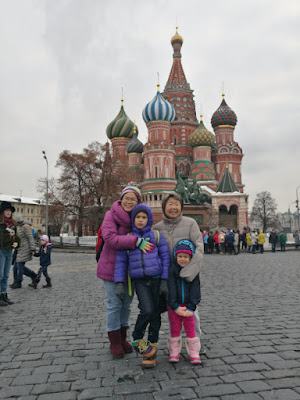

lots of pictures like this in that post


Ceylon tea bag tea at reindeer farm (with great company)


I visited a few tea shops there but it didn't amount to much.  One interesting version was Perlov in Moscow, a truly beautiful place.  But the tea was on the ordinary side, mostly boxed versions with a good-sized set of one loose version per category type jar teas.  That's a great start for a tea shop but only a start.

a very helpful local, in the Perlov shop


Moychay shops went further; I bought tea in those in Moscow and St. Petersburg.  Georgian black tea was the closest I came to finding Russian tea, except for a green version from Perlov, which sort of doesn't count since that's my least favorite tea category (although it was a good version).  One Moychay Nan Nuo sheng pu'er I bought a cake of on a whim was one of my favorite sheng versions I've yet to try, way fruitier and more intense than sheng typically ever is (and approachable in style as a young version; that wouldn't be for everyone).

a small Moychay shop; (you can interactively browse that shelf here)


friendly Moychay staff in a St. Petersburg branch


That link below the first shop photo goes to a page with a very interesting feature; you can look around the shelves and room of those shops, using what seems to be Google Streetview as a viewing platform.  It's especially cool for me because I've been inside those two shops, in Moscow and St. Petersburg, and it's like stepping into them again.  Moving on.

Still on the subject of vacation outings and visiting, meeting the owner of Laos Tea at a tasting in Moscow stood out as a cool exception to the limited tea theme exposure.

Laos Tea tasting, Alexander Zhiryakov (left) and Dasha (smiling)


Onto more general starting points:  Russians are into tea but the tea enthusiast context is an exception there too, just a much more common and better developed exception than where I live, in Bangkok.  That's odd, isn't it?  Chinese culture underpins Thai culture, along with Indian influence and secondary local influences.  Tea probably played a bigger role in mainstream culture here at one or more points in the past but it's just not much of an influence now.  Bubble tea is popular.

It's especially odd given that Thailand produces tea, but then I'm not claiming that no one drinks any of it, instead that forms of what I would consider to be tea enthusiasm almost doesn't exist here.  If you ask 100 random people what Da Hong Pao or Longjing are maybe none will know, and for sure none could taste an example of a version and let you know if it's typical of either.  I know at least a dozen people who are probably exceptions to that in Thailand, but it took a lot of doing getting in contact with them, and half are tea vendors.  There's only one well-known tea cafe in Bangkok, in Chinatown (Double Dogs), with related shops scattered around, especially in that area.

Russians as a whole are more into basic Ceylon black tea; fair enough.  Back to the tea enthusiast scope Chinese tea culture has a strong hold there, and not much else.  I walked into a business selling Japanese green tea looking for one of those Moychay shops in St. Petersburg, and talked to the owners a little, but I don't like Japanese tea enough to have seriously considered trying or buying any.  It's clear enough why some people are on that page when I do taste those, and I've reviewed versions, but it's just not for me related to how my preference maps out, at least for now.

I researched Russian tea history related to a random contact asking what an East German tea blend might have been just after the Cold War started, covered in that post.  Not much new turns up in that, except the idea that at one point Russia consumed a lot of tea from Georgia.  This is the kind of idea that one runs across pretty early on in any exploration of Russian tea culture.  Other themes:  how a samovar works, how Russian tea was typically prepared, about mixing tea and herbs there, or stirring jam into it per one older popular practice.


old version of a Cold War tea (original source credited in an earlier post)


We even tried tea mixed with herbs prepared in a samovar in a visit to a dogsled camp in Murmansk.  It was ok.  The general idea is to brew the tea very strong, to "brew it out," and then to dilute it with water to taste, and probably add milk and sugar too given the flavor profile that results.  Adding herbs--particularly Ivan Chay, also known as willow herb, or fire weed--helps on two levels, making it more mild and further stretching the tea.


As to current Russian tea enthusiast context and forms of experience, I'll say more about that related to what Alexander mentioned.


Meeting Alexander Vorontsov; about Russian tea culture


We met at my favorite local Bangkok Chinatown shop, at Jip Eu.  The owners of that shop feel like family to me; they're great hosts.  I was going to say more about that shop in general but since I've visited there a few times recently I think I'll split that out to a later post.


meeting a friend from Laos there, within the last week (Somnuc Anousinh)


This also won't cover that visit in terms of most of the personal discussion details, beyond the parts about Russian tea culture, because it's running too long.  Alexander seems nice, and genuine; I'll mostly stop at saying that.  And he's genuinely obsessed with the subject of tea, so we have a good bit in common.  To shorten the rest I'll cover it by subject.


Tea groups:  this stands out to me as the main difference between Russian tea appreciation forms and elsewhere.  His Instagram page / group has 5295 followers (at time of first draft; surely some from overseas enthusiasts, since people tend to just click add related to their topic interest), so probably a lot of real-life local "club" members.  I don't know how formal that club really is or how many local active members ever meet, but all that isn't really the point here, at least in this section.


that's him, along with group stats and a cool logo


There are at least two other large groups of somewhat organized enthusiasts in Moscow:  Global Tea Hut more or less has a branch there, and Moychay operates a series of tea clubs (like cafes, but not like cafes), that seems to represent a fairly well organized social group.  And Tea Masters is there; that probably counts as a fourth, although it's something different than a social club, sort of a training organization that holds very formal, developed competitions.

The trend seems unique.  Eastern Europeans seem a bit more organized in forms of tea practice and social networking (as reviewed in looking into tea culture in Poland here and here), but seemingly nowhere else is on that level for group structures.

I'll clarify what I mean by that.  There are a lot of small, informal groups of tea enthusiasts in the US, and Facebook groups, and shops and cafes, but as far as I know almost nothing related to those forms of groups.  Tea Masters just started up there in the past year; there's that.  Global Tea Hut would have US followers, but as far as I know nothing like a branch outlet.  And no "tea clubs," in the sense the Moose and the Elks were US social clubs in the past (and still are, just "traditional" forms of them).


Global Tea Hut Zen tea master monk Wu De; different (story here)


Taking tea interest way too far:  lots of people in different countries go there, right?  Maybe not in the same form.  Beyond those clubs and the prevalence of shops and small vendors there's an emphasis on trying rare or interesting teas with developed back-stories, like those narrow regional theme versions tied to Longjing, Da Hong Pao, and the rest.  Everyone likes a good story, and an exceptional tea, but I get a vague sense that sub-themes take on a life of their own there.

In Western tea circles--which the Russian form could be considered a part of, but I mean elsewhere--there are one-upmanship games that get played related to experiencing high quality teas, possessing deeper knowledge, or owning teaware, a sub-theme that branches a bit.  Maybe I'm mistaken but I get the sense that Russians extend that to embracing stories more, to really appreciating traditional background themes and rarity in versions, and of course also tied to those other familiar forms.

Some Western vendors do use stories to sell teas (a number of examples come to mind), but it seems a minority practice.  Most would talk about the teas themselves, their positive attributes, and largely leave the claims about exclusivity and tea history out of it (beyond reference to legends of statues coming to life and such, good for entertainment value).  Except for claiming that sheng pu'er versions are gushu, from old plant sources, I guess; that's as common as grass.  There's some degree of push-back related to people flagging gaps in the stories that do come up, with tea tree age claims making up the main point of contention.  Not necessarily about pu'er being gushu, although low-cost gushu is often questioned, more about the 1000+ year old plant claims.

Or then again maybe I really am overthinking all this, or basing it on limited input, and Russian tea enthusiasts really are mostly just looking for interesting and higher quality tea.


Tea and popular culture, especially music:  I once saw a Russian rap music video of a guy stealing a pu'er cake, and the trying to smoke it at one point, that I'd love to find again.  It lost something for me not understanding the words or being completely into the music form but the impression stuck with me.  That's not necessarily an exception; there is a connection between the two themes and scopes there, popular music culture and tea.

One tea shop that comes up a good bit in images has a tie to a famous music performer as the primary owner, a type of association that I'm not familiar with in the US.  The shop is Gazgolder (with that link seemingly tied to the primary manager, versus a business profile page, and this a Trip Advisor link about visiting), owned by a rap star Basta, with this video on the tea club part there.  This is a music video (by Basta / Баста) with a connection to those other themes and tea.  With over 8 million views this isn't related to marginal following, quite mainstream instead.  Watching foreign language music videos typically doesn't go well but that one is worth a look.


Tea and prison culture:  Alexander told a cool story about what "prison tea" refers to, about how brewing up a large pail of very strong tea in prison works as substitute for alcohol.  I'm sure the stories of this connection go a lot further, and the real-life linkage does too.  It's hard to imagine the popular culture image of US prisons matching up with any form of tea consumption.

He mentioned a reference about this describing this connection, which I won't go into further here.


Tea sourcing differences:  I'll summarize prior discussion with Alexander and others related to this point more than what we actually talked about.  He had said before that Russians tend to focus on using Russian sources for tea, vendors that buy and resell Chinese versions.  It's my understanding that Yunnan Sourcing (a main US vendor) also sells a reasonable amount of tea in Russia too, but the ideas still don't necessarily conflict; the theme and generality is about relative proportions.

In fact smaller vendors or larger resale theme outlets are how consumers in the US obtain most tea too, by a large margin, so me expecting tea to be purchased directly from abroad instead probably just relates most to my own preconceptions and personal experience.  If we had more Thai shops and online outlets selling better teas maybe I'd not have expected that.

The amount of "better" tea being purchased and consumed in Thailand is probably negligible compared to in Russia, with most of that Thai-produced oolong.  It would be natural for some to see that as "not that much better," but the use here seems clear enough, better than what tends to turn up in tea bags or on grocery store shelves.  Which just depends on the grocery store too, I guess, as much as local culture and broader demand.  Grocery stores in Russia did tend to have slightly better selection for black teas, flavored versions, and blends than I typically see here, just a bit more limited range related to inexpensive oolong since Thai versions are around.

so many iconic places there (GUM in Red Square)


Moychay:  I've reviewed a lot of tea from this vendor and have even written some article content for them.  Their main owner, Sergey Shevelev, seems like a genuine tea enthusiast to me, surely focused on business goals, but also personally connected by the same interest tea drinkers experience (more obsessed ones; the people discussing it in more advanced theme Facebook groups).  That's essentially true of every tea vendor, but the form and level of knowledge and experience varies.  You don't need to take my word for all that; scan some related background videos on Youtube, which can even do automatic translation now to make that content more accessible.

Their diversified role as a main physical shop chain, online tea source, and provider of tea club experience (like a cafe, but not really that) stands out as something unique.  In the US this would almost seem to be too much influence for any one vendor to have, even beyond there being no parallel to the club theme.  But there, with tea culture a bit more mainstream, and options more diverse, the context is different.


helpful Moychay staff; meeting Russians made visiting Russia great


Why US popular tea culture and vendor concerns don't match up with those in Russia


There is an unrelated concern about Western (US and other) tea culture and vending, which I'll cover in the form of a long tangent here, since this helps place the broader context difference.

Teavana consolidated a lot of US physical shop ownership and sales under Starbucks at one point, only to see profit margins narrow, and then folded, leaving a gap in shop availability.  This is really only one individual concern, that one vendor growing too large and then failing could impact local consumption.  Prior to that Teavana put focus on blends instead of better individual teas, which can command a higher mark-up and profit margin.  This used their influence to offset what I see as the main opposite trend in natural personal tea preference transitions, moving from blends to original, single-type and source teas.

It's too much of a tangent to firmly establish here but it's my impression that T2 (a chain originated in Australia) represents a similar problematic theme, again related to a large corporate interest.  I bought good, single-origin, high quality teas at a T2 on a visit in Australia some years ago, and upon checking selection later after their Unilever buy-out those types I'd bought just weren't part of the stock.  That's too much to claim in a tangent, isn't it?  Judge for yourself; here's their current oolong selection page, and a version captured from July of 2012, a year before Unilever bought the chain.  You don't need me to interpret what changed.


they had a cool aesthetic going; it's a shame selection quality didn't match it


Of course I'm not saying that Moychay or any other large vendor there shouldn't be expanding or covering different roles for some reason; quite the opposite.  It's my impression that more large chains have developed there; that alone offsets this kind of risk and problem.  If anything I'm positively biased towards Moychay as a vendor, and the rule of supply and demand and open competition keeps their direction in check.  Their teas seem to represent generally good range and value to me, and to be sold with a reasonable degree of information about what products are, adding more value for educating consumers about tea options.  The two shops I've visited--smaller versions, per my understanding--were beautiful, with good selection of different types, sources, and quality levels of tea, and very friendly and helpful staff.


a Moychay pressed tisane; extending a current trend beyond "real" tea


Moychay did seem to possess the potential for a similar degree of local tea-culture influence comparable to all of the current US tea vending combined, since there's more developed tea culture there to begin with; that's what really led to this line of thinking and comparison.  It's just not as singular an influence as happened to occur with Teavana; a consolidation and unified development didn't occur in the same way.


Of course Unilever "gets" tea, just not the teas I drink, or what some of the range of tea culture is all about.  Offering flavored teas and blends to consumers based on demand is fine; that's quite appropriate.  Steering away from also offering the other range of "better" teas because per-unit profit margin is lower is something else altogether, especially if there wouldn't be other store options around.  Those other parts of the tea market should be supported, and expanded demand for Lipton and flavored teas should serve as a gateway to other types.  Both the demand and the shops would have evolved together more organically in the US, with the consolidation and then closure perhaps setting that back a bit.

I'll be clearer yet; it seemed short-sighted to me for large outlets like Teavana or T2 to disregard rather than embrace the entire range of teas produced and available.  It seemed likely that a single-minded focus on per-unit return and short-term profit offset educating consumers.  Or maybe that happened because demand would naturally extend onto what other vendors are selling, outlets like Yunnan Sourcing (and others), and it made more sense to restrict expectations to a narrower range than to try and compete across a broader scope. 

I really don't know the causes, but it is disappointing that more potential wasn't realized, to increase broader US demand and to help support specialty tea producer demand.  Large scale high volume producers, who make the teas used to make blends, are more securely positioned, and although surges in individual type demand could increase prices (an issue on the consumer side) small growers and producers are often working within narrower margins for success.  That's my understanding, at least.


Including so much discussion of a few particular vendors serves a secondary purpose; I see commercial structure and direction as one main underpinning condition for local tea culture, even if the internet helps broaden that back out.  If I were to talk further about present US tea culture, beyond discussing Teavana, I would explore why tea subscriptions have come to play such a large role in organizing consumers into groups, or why Yunnan Sourcing has a vendor themed Facebook tea group, what causes that to make sense and what it means.  I've discussed the problems and limitations with such a single-supplier theme in that group before; as you could imagine that went over really well.

It's a positive thing that the themes of people gathering into social networks and groups mix with those of vendors providing commercial services.  This only becomes negative when the normal forces of supply and demand become disrupted, and marketing issues steer people towards the highest return forms of tea, versus supporting awareness of options and naturally evolving demand.

Back to the main subject here, Russian tea culture.


Conclusions, and what I don't get


These are glimpses and fragments related to why I find Russian tea culture to be fascinating, even though to be sure I understand relatively little about it.

I really don't completely get the Tea Masters or Global Tea Hut themes at all.  I don't do much with formal tea ceremony, or tea in relation to religion or mindfulness practice.  That's even though I do have a long personal history with the study of Buddhism, and I'm sort of a part of an Eastern culture due to living in Asia (Bangkok).


more into religious practice at one point, but not drinking much tea there


Surely beyond these more formal forms or expressions of tea interest I'm not familiar with where other Russians fall, in between drinking Ceylon from a grocery store and the rarest of rare types, and training in formal tea ceremony practices.  Broad categories of ideas that would come up I've not addressed here, for example a demand for organically produced teas, concerns about health risks related to chemical use in production.  Alexander mentioned this is a significant concern among Russian consumers, but that there aren't always good ways to address risks related to different kind of growing conditions as teas are now sold, at least not in a lot of cases.

A lot of people there must just like tea, in a basic form.  One of the nicest people I met in visiting Russia (and most of the people we met were very kind) helped me check out what was in those jars in the Perlov shop, and he clearly liked tea but wasn't swept up with an obsession with it.  He probably would have passed that Da Hong Pao / Longjing identification test I mentioned, spotting familiar types.  But probably not in the same form Alexander and I would, related to really being able to place examples, and the next sets of main types as well.

This seems no suitable place to end, as if exploring disconnected themes just leaves off.  Learning about foreign cultures is like that.  My children have had a number of Chinese school friends (and from Japan, India, Taiwan, etc.), and as we get to know them and their parents better perspective and customs become more familiar, but the learning process is slow.  Visiting a place doesn't lead to as much insight as one might expect, because short discussions with locals only go so far, and local travel themes tend to dominate concerns.  I'll keep learning about tea culture related to Russia, and other places, as shared observations from others fill in details.


not a common type, not even a standard hei cha, but something interesting