Showing posts with label St. Petersburg. Show all posts

Sunday, November 17, 2019

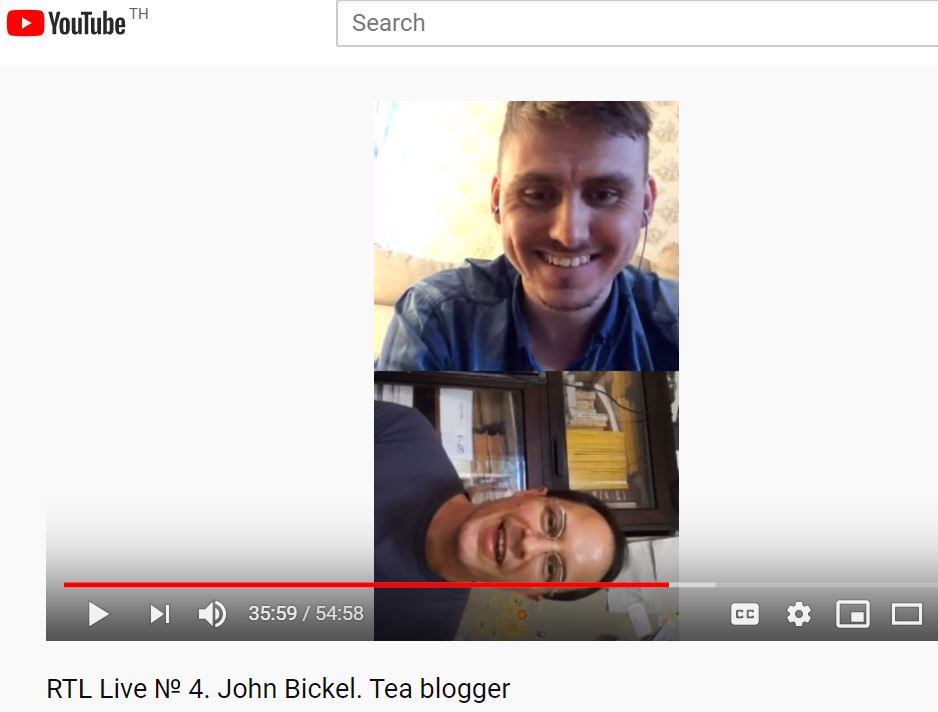
Video interview with the Russian Tea Lovers founder


I just did a video interview with Alexander Vorontsov, the founder of the Russian Tea Lovers group (one founder, at least), with that video here.   I just realized that I'm sideways in that, checking it out to post about it.  It's always the little details.


I've met him before, and discussed Russian tea culture, most of which is summarized in this post.  It's a bit redundant to say a lot about the video since that content stands alone, but I'll introduce who that group is and what we talked about in order to help people determine if watching it would be of interest.

meeting Alexander at the one local shop I always go to, Jip Eu


That group holds local tea tastings, with members sharing both tea and information about exploring tea elsewhere.  Chinese teas have the most influence in Russia, I think, but there is local Sochi area production, and a deeper history of tea production in Georgia (with more on that history here). 

On my end we visited Russia a couple of years ago, with a travel oriented post about that here.  Russia is amazing, and the local tea culture runs deeper there than here in Bangkok, even though Chinese culture is the main influence on Thai culture, with Thais mostly descended from multiple waves of Chinese immigrants.  I've reviewed a lot of tea from Moychay, one of their main suppliers, who also runs tea clubs there (something different).  Their one Nannuo sheng pu'er I bought on that first trip was one of my overall favorite tea versions.


tea tasting in Moscow with Dasha and Alexander, the Laos Tea founder


In that video we talked about international tea culture themes, and how local perspectives go back in the US.  I mentioned what I'm up to related to tea, and my own favorite other tea blogs (Steep Stories, Tea DB, Tea Addict's Journal), and we discussed why Tea for Me Please is probably the most influential US blog, and how that subculture works out.  Then onto organic themes related to tea, online group culture, sourcing, and so on, pretty much all what one would expect.

so many cool places to visit there


Thursday, August 29, 2019

Russian tea culture


I've meant to write something related to Russian tea culture for awhile.  We visited Russia over Christmas and New Years of 2018, which led to more research, writing, and online contact related to that theme.  But never to a blog post specifically on Russian tea culture, except a TChing post about it, which was really to summarize a lot of other content in short form.

I'm still no authority on the subject, but one of the more interesting contacts I'd talked to online visited Bangkok not so long ago, Alexander Vorontsov, one founder of the Russian Tea Lover's group page on Instagram.  Or it was not so long ago when I started this post draft a month ago, since I kept adding to it.  That online group corresponded to a number of people who regularly meet and drink tea together, not stopping at online discussion, as many groups do.


with Kittichai, the Jip Eu shop owner


This covers my limited understanding of tea culture in Russia, what I took away as Alexander's input about that subject, combined with input from other discussions.  Any tea enthusiast active in related groups living in Moscow or St. Petersburg would have a more informed perspective, but then I do end up talking to Russians about tea more than most.  Part of that relates to this blog, and to talking to people in the role as admin of an international themed Facebook tea group.


the last Russian tea enthusiast to visit in April, Tatiana Zhukova


Background:  vacation experiences and other pre-conceptions


It goes without saying that I had no ties to Russian culture prior to visiting Russia, but all the same I'll say it.  I know two Russians selling tea in Thailand, one of those only through online contact, but to me that doesn't count as significant input about there.  That made visiting the country all the more interesting.

There was the Cold War background, since I'm old enough to have grown up during that (I'm 50; to save younger readers from doing the math I graduated from high school in 1986, five years before the end of the Soviet Union).  My family loved that vacation visit, which I won't go into here, sticking to the subject of tea (but I already did cover that other travel scope in this post).


lots of pictures like this in that post


Ceylon tea bag tea at reindeer farm (with great company)


I visited a few tea shops there but it didn't amount to much.  One interesting version was Perlov in Moscow, a truly beautiful place.  But the tea was on the ordinary side, mostly boxed versions with a good-sized set of one loose version per category type jar teas.  That's a great start for a tea shop but only a start.

a very helpful local, in the Perlov shop


Moychay shops went further; I bought tea in those in Moscow and St. Petersburg.  Georgian black tea was the closest I came to finding Russian tea, except for a green version from Perlov, which sort of doesn't count since that's my least favorite tea category (although it was a good version).  One Moychay Nan Nuo sheng pu'er I bought a cake of on a whim was one of my favorite sheng versions I've yet to try, way fruitier and more intense than sheng typically ever is (and approachable in style as a young version; that wouldn't be for everyone).

a small Moychay shop; (you can interactively browse that shelf here)


friendly Moychay staff in a St. Petersburg branch


That link below the first shop photo goes to a page with a very interesting feature; you can look around the shelves and room of those shops, using what seems to be Google Streetview as a viewing platform.  It's especially cool for me because I've been inside those two shops, in Moscow and St. Petersburg, and it's like stepping into them again.  Moving on.

Still on the subject of vacation outings and visiting, meeting the owner of Laos Tea at a tasting in Moscow stood out as a cool exception to the limited tea theme exposure.

Laos Tea tasting, Alexander Zhiryakov (left) and Dasha (smiling)


Onto more general starting points:  Russians are into tea but the tea enthusiast context is an exception there too, just a much more common and better developed exception than where I live, in Bangkok.  That's odd, isn't it?  Chinese culture underpins Thai culture, along with Indian influence and secondary local influences.  Tea probably played a bigger role in mainstream culture here at one or more points in the past but it's just not much of an influence now.  Bubble tea is popular.

It's especially odd given that Thailand produces tea, but then I'm not claiming that no one drinks any of it, instead that forms of what I would consider to be tea enthusiasm almost doesn't exist here.  If you ask 100 random people what Da Hong Pao or Longjing are maybe none will know, and for sure none could taste an example of a version and let you know if it's typical of either.  I know at least a dozen people who are probably exceptions to that in Thailand, but it took a lot of doing getting in contact with them, and half are tea vendors.  There's only one well-known tea cafe in Bangkok, in Chinatown (Double Dogs), with related shops scattered around, especially in that area.

Russians as a whole are more into basic Ceylon black tea; fair enough.  Back to the tea enthusiast scope Chinese tea culture has a strong hold there, and not much else.  I walked into a business selling Japanese green tea looking for one of those Moychay shops in St. Petersburg, and talked to the owners a little, but I don't like Japanese tea enough to have seriously considered trying or buying any.  It's clear enough why some people are on that page when I do taste those, and I've reviewed versions, but it's just not for me related to how my preference maps out, at least for now.

I researched Russian tea history related to a random contact asking what an East German tea blend might have been just after the Cold War started, covered in that post.  Not much new turns up in that, except the idea that at one point Russia consumed a lot of tea from Georgia.  This is the kind of idea that one runs across pretty early on in any exploration of Russian tea culture.  Other themes:  how a samovar works, how Russian tea was typically prepared, about mixing tea and herbs there, or stirring jam into it per one older popular practice.


old version of a Cold War tea (original source credited in an earlier post)


We even tried tea mixed with herbs prepared in a samovar in a visit to a dogsled camp in Murmansk.  It was ok.  The general idea is to brew the tea very strong, to "brew it out," and then to dilute it with water to taste, and probably add milk and sugar too given the flavor profile that results.  Adding herbs--particularly Ivan Chay, also known as willow herb, or fire weed--helps on two levels, making it more mild and further stretching the tea.


As to current Russian tea enthusiast context and forms of experience, I'll say more about that related to what Alexander mentioned.


Meeting Alexander Vorontsov; about Russian tea culture


We met at my favorite local Bangkok Chinatown shop, at Jip Eu.  The owners of that shop feel like family to me; they're great hosts.  I was going to say more about that shop in general but since I've visited there a few times recently I think I'll split that out to a later post.


meeting a friend from Laos there, within the last week (Somnuc Anousinh)


This also won't cover that visit in terms of most of the personal discussion details, beyond the parts about Russian tea culture, because it's running too long.  Alexander seems nice, and genuine; I'll mostly stop at saying that.  And he's genuinely obsessed with the subject of tea, so we have a good bit in common.  To shorten the rest I'll cover it by subject.


Tea groups:  this stands out to me as the main difference between Russian tea appreciation forms and elsewhere.  His Instagram page / group has 5295 followers (at time of first draft; surely some from overseas enthusiasts, since people tend to just click add related to their topic interest), so probably a lot of real-life local "club" members.  I don't know how formal that club really is or how many local active members ever meet, but all that isn't really the point here, at least in this section.


that's him, along with group stats and a cool logo


There are at least two other large groups of somewhat organized enthusiasts in Moscow:  Global Tea Hut more or less has a branch there, and Moychay operates a series of tea clubs (like cafes, but not like cafes), that seems to represent a fairly well organized social group.  And Tea Masters is there; that probably counts as a fourth, although it's something different than a social club, sort of a training organization that holds very formal, developed competitions.

The trend seems unique.  Eastern Europeans seem a bit more organized in forms of tea practice and social networking (as reviewed in looking into tea culture in Poland here and here), but seemingly nowhere else is on that level for group structures.

I'll clarify what I mean by that.  There are a lot of small, informal groups of tea enthusiasts in the US, and Facebook groups, and shops and cafes, but as far as I know almost nothing related to those forms of groups.  Tea Masters just started up there in the past year; there's that.  Global Tea Hut would have US followers, but as far as I know nothing like a branch outlet.  And no "tea clubs," in the sense the Moose and the Elks were US social clubs in the past (and still are, just "traditional" forms of them).


Global Tea Hut Zen tea master monk Wu De; different (story here)


Taking tea interest way too far:  lots of people in different countries go there, right?  Maybe not in the same form.  Beyond those clubs and the prevalence of shops and small vendors there's an emphasis on trying rare or interesting teas with developed back-stories, like those narrow regional theme versions tied to Longjing, Da Hong Pao, and the rest.  Everyone likes a good story, and an exceptional tea, but I get a vague sense that sub-themes take on a life of their own there.

In Western tea circles--which the Russian form could be considered a part of, but I mean elsewhere--there are one-upmanship games that get played related to experiencing high quality teas, possessing deeper knowledge, or owning teaware, a sub-theme that branches a bit.  Maybe I'm mistaken but I get the sense that Russians extend that to embracing stories more, to really appreciating traditional background themes and rarity in versions, and of course also tied to those other familiar forms.

Some Western vendors do use stories to sell teas (a number of examples come to mind), but it seems a minority practice.  Most would talk about the teas themselves, their positive attributes, and largely leave the claims about exclusivity and tea history out of it (beyond reference to legends of statues coming to life and such, good for entertainment value).  Except for claiming that sheng pu'er versions are gushu, from old plant sources, I guess; that's as common as grass.  There's some degree of push-back related to people flagging gaps in the stories that do come up, with tea tree age claims making up the main point of contention.  Not necessarily about pu'er being gushu, although low-cost gushu is often questioned, more about the 1000+ year old plant claims.

Or then again maybe I really am overthinking all this, or basing it on limited input, and Russian tea enthusiasts really are mostly just looking for interesting and higher quality tea.


Tea and popular culture, especially music:  I once saw a Russian rap music video of a guy stealing a pu'er cake, and the trying to smoke it at one point, that I'd love to find again.  It lost something for me not understanding the words or being completely into the music form but the impression stuck with me.  That's not necessarily an exception; there is a connection between the two themes and scopes there, popular music culture and tea.

One tea shop that comes up a good bit in images has a tie to a famous music performer as the primary owner, a type of association that I'm not familiar with in the US.  The shop is Gazgolder (with that link seemingly tied to the primary manager, versus a business profile page, and this a Trip Advisor link about visiting), owned by a rap star Basta, with this video on the tea club part there.  This is a music video (by Basta / Баста) with a connection to those other themes and tea.  With over 8 million views this isn't related to marginal following, quite mainstream instead.  Watching foreign language music videos typically doesn't go well but that one is worth a look.


Tea and prison culture:  Alexander told a cool story about what "prison tea" refers to, about how brewing up a large pail of very strong tea in prison works as substitute for alcohol.  I'm sure the stories of this connection go a lot further, and the real-life linkage does too.  It's hard to imagine the popular culture image of US prisons matching up with any form of tea consumption.

He mentioned a reference about this describing this connection, which I won't go into further here.


Tea sourcing differences:  I'll summarize prior discussion with Alexander and others related to this point more than what we actually talked about.  He had said before that Russians tend to focus on using Russian sources for tea, vendors that buy and resell Chinese versions.  It's my understanding that Yunnan Sourcing (a main US vendor) also sells a reasonable amount of tea in Russia too, but the ideas still don't necessarily conflict; the theme and generality is about relative proportions.

In fact smaller vendors or larger resale theme outlets are how consumers in the US obtain most tea too, by a large margin, so me expecting tea to be purchased directly from abroad instead probably just relates most to my own preconceptions and personal experience.  If we had more Thai shops and online outlets selling better teas maybe I'd not have expected that.

The amount of "better" tea being purchased and consumed in Thailand is probably negligible compared to in Russia, with most of that Thai-produced oolong.  It would be natural for some to see that as "not that much better," but the use here seems clear enough, better than what tends to turn up in tea bags or on grocery store shelves.  Which just depends on the grocery store too, I guess, as much as local culture and broader demand.  Grocery stores in Russia did tend to have slightly better selection for black teas, flavored versions, and blends than I typically see here, just a bit more limited range related to inexpensive oolong since Thai versions are around.

so many iconic places there (GUM in Red Square)


Moychay:  I've reviewed a lot of tea from this vendor and have even written some article content for them.  Their main owner, Sergey Shevelev, seems like a genuine tea enthusiast to me, surely focused on business goals, but also personally connected by the same interest tea drinkers experience (more obsessed ones; the people discussing it in more advanced theme Facebook groups).  That's essentially true of every tea vendor, but the form and level of knowledge and experience varies.  You don't need to take my word for all that; scan some related background videos on Youtube, which can even do automatic translation now to make that content more accessible.

Their diversified role as a main physical shop chain, online tea source, and provider of tea club experience (like a cafe, but not really that) stands out as something unique.  In the US this would almost seem to be too much influence for any one vendor to have, even beyond there being no parallel to the club theme.  But there, with tea culture a bit more mainstream, and options more diverse, the context is different.


helpful Moychay staff; meeting Russians made visiting Russia great


Why US popular tea culture and vendor concerns don't match up with those in Russia


There is an unrelated concern about Western (US and other) tea culture and vending, which I'll cover in the form of a long tangent here, since this helps place the broader context difference.

Teavana consolidated a lot of US physical shop ownership and sales under Starbucks at one point, only to see profit margins narrow, and then folded, leaving a gap in shop availability.  This is really only one individual concern, that one vendor growing too large and then failing could impact local consumption.  Prior to that Teavana put focus on blends instead of better individual teas, which can command a higher mark-up and profit margin.  This used their influence to offset what I see as the main opposite trend in natural personal tea preference transitions, moving from blends to original, single-type and source teas.

It's too much of a tangent to firmly establish here but it's my impression that T2 (a chain originated in Australia) represents a similar problematic theme, again related to a large corporate interest.  I bought good, single-origin, high quality teas at a T2 on a visit in Australia some years ago, and upon checking selection later after their Unilever buy-out those types I'd bought just weren't part of the stock.  That's too much to claim in a tangent, isn't it?  Judge for yourself; here's their current oolong selection page, and a version captured from July of 2012, a year before Unilever bought the chain.  You don't need me to interpret what changed.


they had a cool aesthetic going; it's a shame selection quality didn't match it


Of course I'm not saying that Moychay or any other large vendor there shouldn't be expanding or covering different roles for some reason; quite the opposite.  It's my impression that more large chains have developed there; that alone offsets this kind of risk and problem.  If anything I'm positively biased towards Moychay as a vendor, and the rule of supply and demand and open competition keeps their direction in check.  Their teas seem to represent generally good range and value to me, and to be sold with a reasonable degree of information about what products are, adding more value for educating consumers about tea options.  The two shops I've visited--smaller versions, per my understanding--were beautiful, with good selection of different types, sources, and quality levels of tea, and very friendly and helpful staff.


a Moychay pressed tisane; extending a current trend beyond "real" tea


Moychay did seem to possess the potential for a similar degree of local tea-culture influence comparable to all of the current US tea vending combined, since there's more developed tea culture there to begin with; that's what really led to this line of thinking and comparison.  It's just not as singular an influence as happened to occur with Teavana; a consolidation and unified development didn't occur in the same way.


Of course Unilever "gets" tea, just not the teas I drink, or what some of the range of tea culture is all about.  Offering flavored teas and blends to consumers based on demand is fine; that's quite appropriate.  Steering away from also offering the other range of "better" teas because per-unit profit margin is lower is something else altogether, especially if there wouldn't be other store options around.  Those other parts of the tea market should be supported, and expanded demand for Lipton and flavored teas should serve as a gateway to other types.  Both the demand and the shops would have evolved together more organically in the US, with the consolidation and then closure perhaps setting that back a bit.

I'll be clearer yet; it seemed short-sighted to me for large outlets like Teavana or T2 to disregard rather than embrace the entire range of teas produced and available.  It seemed likely that a single-minded focus on per-unit return and short-term profit offset educating consumers.  Or maybe that happened because demand would naturally extend onto what other vendors are selling, outlets like Yunnan Sourcing (and others), and it made more sense to restrict expectations to a narrower range than to try and compete across a broader scope. 

I really don't know the causes, but it is disappointing that more potential wasn't realized, to increase broader US demand and to help support specialty tea producer demand.  Large scale high volume producers, who make the teas used to make blends, are more securely positioned, and although surges in individual type demand could increase prices (an issue on the consumer side) small growers and producers are often working within narrower margins for success.  That's my understanding, at least.


Including so much discussion of a few particular vendors serves a secondary purpose; I see commercial structure and direction as one main underpinning condition for local tea culture, even if the internet helps broaden that back out.  If I were to talk further about present US tea culture, beyond discussing Teavana, I would explore why tea subscriptions have come to play such a large role in organizing consumers into groups, or why Yunnan Sourcing has a vendor themed Facebook tea group, what causes that to make sense and what it means.  I've discussed the problems and limitations with such a single-supplier theme in that group before; as you could imagine that went over really well.

It's a positive thing that the themes of people gathering into social networks and groups mix with those of vendors providing commercial services.  This only becomes negative when the normal forces of supply and demand become disrupted, and marketing issues steer people towards the highest return forms of tea, versus supporting awareness of options and naturally evolving demand.

Back to the main subject here, Russian tea culture.


Conclusions, and what I don't get


These are glimpses and fragments related to why I find Russian tea culture to be fascinating, even though to be sure I understand relatively little about it.

I really don't completely get the Tea Masters or Global Tea Hut themes at all.  I don't do much with formal tea ceremony, or tea in relation to religion or mindfulness practice.  That's even though I do have a long personal history with the study of Buddhism, and I'm sort of a part of an Eastern culture due to living in Asia (Bangkok).


more into religious practice at one point, but not drinking much tea there


Surely beyond these more formal forms or expressions of tea interest I'm not familiar with where other Russians fall, in between drinking Ceylon from a grocery store and the rarest of rare types, and training in formal tea ceremony practices.  Broad categories of ideas that would come up I've not addressed here, for example a demand for organically produced teas, concerns about health risks related to chemical use in production.  Alexander mentioned this is a significant concern among Russian consumers, but that there aren't always good ways to address risks related to different kind of growing conditions as teas are now sold, at least not in a lot of cases.

A lot of people there must just like tea, in a basic form.  One of the nicest people I met in visiting Russia (and most of the people we met were very kind) helped me check out what was in those jars in the Perlov shop, and he clearly liked tea but wasn't swept up with an obsession with it.  He probably would have passed that Da Hong Pao / Longjing identification test I mentioned, spotting familiar types.  But probably not in the same form Alexander and I would, related to really being able to place examples, and the next sets of main types as well.

This seems no suitable place to end, as if exploring disconnected themes just leaves off.  Learning about foreign cultures is like that.  My children have had a number of Chinese school friends (and from Japan, India, Taiwan, etc.), and as we get to know them and their parents better perspective and customs become more familiar, but the learning process is slow.  Visiting a place doesn't lead to as much insight as one might expect, because short discussions with locals only go so far, and local travel themes tend to dominate concerns.  I'll keep learning about tea culture related to Russia, and other places, as shared observations from others fill in details.


not a common type, not even a standard hei cha, but something interesting


Sunday, May 20, 2018

Moychay Menghai Lao Shu and Lao Teji shou pu'er (2008 and 2009)


Onto more samples from Moychay, the Russian vendor who was so kind as to send a good number, first reviewed in this compressed sun-dried Yunnan black tea post.

I'll add a little more detail about what they are at the end, but for now I'm comparing these teas:

Menghai Lao Shou Cha 2008 loose leaf ripe pu'er (shou)

Lao Teji 2009 loose leaf ripe pu'er (shou)

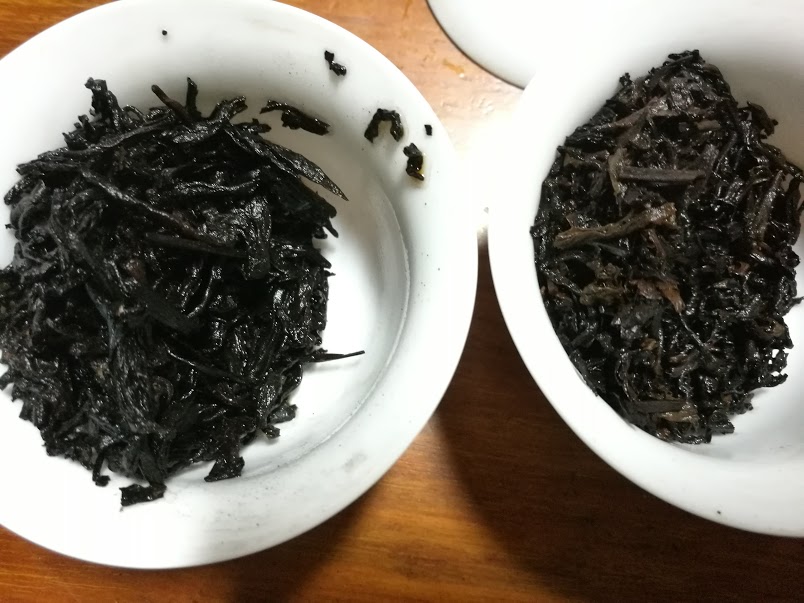
Menghai Lao Shou left, Lao Teji right


labels (I've copied these descriptions below)


These might well raise the bar a little for what I've tried of shou pu'er in the past.  That does lead to an interesting concern about the difference between good shou pu'er and shou that's better than you tend to run across.

The lower level divide between shou that tastes like tar and oil, or fish, and more positive versions is easy to experience.  It's also not that hard to work through shou that is decent and positive but on the thinner side, into versions that are more complex and interesting, that have more layers.  The latter takes a little seeking out but they're not expensive as sheng pu'er goes.  Finding a next level could take more doing.  We'll see if that's how this works out per my impression in a tasting.  It goes without saying that one person trying teas one time isn't much to go on, definitely not a complete, objective read on the tea.

It goes against my normal process (except the part about varying approach a lot as habit) but I'll mention the description on the label for these as a starting point.


Menghai Lao Shou Cha:  The bouquet of brewed tea is mature, spicy-woody, with earthy, auturnal, nutty and spicey notes.  The aroma is warm and deep, nutty.  The taste is rich, slightly tart, velvety, with light bitterness and nuances of spices.


Lao Teji:  The bouquet of brewed tea is rich and mature, with nutty, woody pastry and spicy notes.  The aroma is warm and deep , nutty.  The taste is full-bodied and soft, velvety, sweetish, with delicate fruit sourness, spicy nuances and a lingering finish.


So similar but different, I guess.  Some of that could influence tasting a bit since I wrote that just before trying them but those two sets of ideas will mix in my head almost immediately.  The idea behind tasting blindly is not to just let preconceptions lead to echoing a lot of the description, to arriving at observations and conclusions for myself.  But it's nice to mix things up too.


Review


Menghai left, Lao Teji right


Menghai Lao Shou Cha:  it's like that description.  Describing more specifically how that earthiness plays out and balances the rest is probably as much a key to description as anything.  The complexity is really something.  It's earthy, towards damp autumn forest floor and peat, but still that comes across as clean in effect.  Nuts and spice probably do fill in supporting elements but I'd expect the other earthiness will be stronger in the first couple of infusions, and then it will transition to a range it will stay in throughout most of the tasting, with balance of aspects shifting less then.

Lao Teji:  this seems like a more conventional shou profile to me, more what I'm used to, but it's clearly one of the best shou I've ever tried (also true of the first, but in a completely different sense).  It might actually help comparing and contrasting these to describe them further, a nice switch from me saying that it makes no sense to taste the two teas I'm reviewing together since they're so different.  This is earthy, nutty, and a little spicy, with just a touch of tar or oil filling in that beyond that range.  For the other tea only forest floor and peat filled a similar space.  Both are probably more positive than they sound, or rather I'd expect people who have had a similar experience to relate to how overall complexity can be positively supported by those ranges of flavors, and how they can be quite pleasant and contribute a lot, and people without such experiences couldn't place that very well.

The tart and sour parts aren't necessarily wrong but that could be misleading.  The one tea wasn't at all tart as in how a black tea can come across (like that Dian Hong cake I reviewed, an aspect that faded out after the initial couple of infusions), or a "Dan Cong black" I tried awhile back (descriptive, but perhaps a bit of a contradiction).  Those ranges may be contributing a little to complexity but they're not primary aspects, at all, at least at this stage.  I'll go through more of untangling aspects in the next round, placing the earthiness, nuttiness, and spice better.


Second infusion


It's a little early in for the messing around but I'll give this round a 15 to 20 second infusion, brewed strong, and move to a 5 to 10 second infusion next time, the more standard range.  I already know there aren't flaws in the body of these teas (the feel aspects), or issues with astringency, so it's just about seeing what changes, not pushing them to get a stronger read on those aspect ranges.


not ideal brewed inky dark but the teas do still work that way


Something like spice really does pick up in the Menghai version this round, and it does clean up quite a bit, even though it wasn't murky at all in the first infusion.  A lot of the autumn forest floor / peat range moves into something in between spice and nut.  The closest nut is probably chestnut, with that fresh roasted effect coming across too, the way that nut flavor warms and transitions, becoming sweeter and "darker."  This is a really nice shou; pleasant, clean, complex, and interesting.  There's always range for more complexity or for some other aspects to make for a potential positive input but it really works.  Of course it would seem odd, if someone isn't into shou, but it would seem that most people who are would love it.


Again the Lao Teji profile is more what I'm used to in shou; again it's earthy, but in a completely different sense.  Nutty and spicy sort of work again but I'm also noticing an aspect range base that reminds me of petroleum.  Tea tasting like oil is going to sound negative, surely, but there's a sweet, mineral intensive earthiness to fresh crude and aged wood-soaked oil barrels (two different scent ranges, related but quite different), with both potentially very positive.  New or used engine oil or road tar are completely different things.  It's more of a sweet mineral range than what typical petroleum range includes (both those comparison aspects I was on and the shared space with this tea).  The tea flavor is very clean though, rich and deep, with a pleasant pronounced aftertaste.  Both of these are full in experience range, really, across how intense they come across at first, then the feel while tasting, and the aftertaste.

Aging has probably rounded off a lot of what might have been negative in these teas, with both around a decade old now.  They have a depth to them that works really well paired with how clean they are in effect.  It's odd saying teas that taste like peat and oil are clean in flavor effect but they most certainly are.  I can only guide a reader so far through making sense of that apparent contradiction; if there is no prior experience to draw on to help with that it surely wouldn't work.  I think someone who has been through some exposure to shou might appreciate these experiences more, not for forgiving or making peace with aspects that are negative but for appreciating aspects that really are positive.

Third infusion


The Menghai Lao Shou Cha shifted character again; cool it can transition that much being a shou.  It's not different, in one sense, it's just that the balance of aspects that had been there is completely different.  This tea does taste like something someone else could pin down better, I'd expect.  The description of betel nut comes up a lot and I always wonder what those taste like, and never thought to buy that the few times I've seen it in Chinatown.

It would work to break the taste down to comparisons to other things but given how many vague references that would entail and the deconstruction and reconstruction process required it might not be informative or worth the trouble.  One trace of that would be "old furniture;" that probably helps indicate why it's not going to help.  I do really like the complexity and depth of the flavor and the rest though; it works well.

Both of these teas have a lot to offer brewed very fast, and they're better brewed lightly.

The Lao Teji is transitioning less; this is perhaps where it's mostly going to be across more infusions.  Again it's clean and complex.  Nutty works as a description, but that's not as pronounced as the roasted chestnut effect in the other tea.  Part of the "deeper" context flavor range does remind me of those forms of petroleum.  It is complex, but I'm not noticing that much in the way of sourness.  This fits the description "tastes like shou" better, which I guess could be very positive or slightly negative, depending on who meant what by that.  To me it's less distinctive and original than the other version.


interesting the Lao Teji (right) looks lighter and brews darker


Fourth infusion:


My wife finally started in about other things I'm supposed to help her with--she's going to China soon, kind of a long story--so this may be the last round I write notes for, or else I'll just add something short about the next round.  These have both leveled off in terms of initial transition anyway, I think, and the next transitions to discuss would be how later rounds play out, how they react to longer steeps around the 8 or 9 infusions level.

The Menghai version is similar to the last round, which is very nice.  Sweetness is picking up a little, and the roasted chestnut effect is moving a little towards a dried fruit I'm not familiar with.  A dried version of yam probably gets the impression across, even if that's not completely it.  Almost all of that old-furniture depth dropped out, replaced by mild dried fruit.  That other aspect had been positive, but I like the fruit better. 

I'm really impressed with this tea.  It could be my favorite of every shou I've ever tried.  It's complex enough that lots of people would probably free-associate the flavors in lots of ways.  As a more regular reader might know that's probably as much about it matching a specific fruit and spice inclined range--my preference--as some objective quality level or whatever trueness to type means for decent shou. 

The Lao Teji is also still transitioning a little and becoming very slightly more positive but is much more consistent.  If the desired premise is sticking to a range that seems more type-typical and reasonably high in quality this shou might well be better.  It's odd it can be that that earthy across that flavor range and still be clean, sweet, and complex, with nothing negative going on at all. 

Fifth infusion:


More of the same.  There is more to go on about, especially related to later transitions since the teas aren't fading yet, but I will let the note taking drop.


Conclusions


Both were really nice versions of shou.  The Lao Teji seemed more familiar from past versions' aspect sets, more typical of the type, but to some extent I liked the Menghai Lao shou better for that reason, for being a bit more novel.  Both were as good as any shou I've tried before, but then it's not as if I've put a lot of effort or expense into trying great shou.  The range of how they come across seems a good bit narrower than for sheng to me, based only on what I've tried, and it was nice these push that range just a little further.

I reviewed a 2010 Myanmar shou not so long ago that was nice, but I didn't care for a bit of char-like effect in that tea compared to these two versions not really including anything like that.  If that aspect did match preference that tea might have been equivalent to these, for being complex and interesting, but as that stood I liked both of these more.


It's nice that the vendor descriptions seem to match the teas; that's helpful.  Shou is the kind of range of style that can be interpreted in different ways but they're descriptive and accurate enough to give you a great idea of what the tea will be like.  Often enough vendors either don't say much or seem to just add a couple of extra adjectives to make a tea sound nice, given that with enough interpretation an extra dried fruit or spice tone might be in there, but if anything these descriptions may have undersold the teas by just a little.  They mentioned tartness and sourness for these, for example (not positive descriptions, as I take those, although different combinations of flavors can work out if they balance), and I didn't really notice them.  Those aspect ranges could've dropped largely out with aging.

I'm curious about pricing, if one was sold as better than the other, or if the cost escalated as sheng tends to related to the age / storage time.  Of course it is fair to charge substantially more for pu'er that someone has stored properly; the vendor has experienced the cost of holding that tea, and accepted the risk of potential problems if there were problems with storage.  Just by hanging around for around a decade a tea product becomes a lot rarer a find.  I'm guessing the tea I liked better (the "Menghai" version) would cost more but that's just a guess, and really what matches what I like and objective quality level are two completely different things.  I'll check their site listings to see.


Menghai Lao Shu Cha 2008

Detail:  Shu Puer «Menghai» was made of the Menghai County plantation tea harvest 2008.  

This tea lists on their site for $16.48 for 100 grams, which would equate to a 357 gram cake costing $55.  That sounds pretty good, really, on the higher side for shou but for better shou than I've ran across, with price increase relating to aging hard to factor in.  I've definitely tried shou that's not nearly as good that cost more.


Lao Teji 2009

More detail:  Aged ripe Puer «Special Grade» was made in Menghai county from spring tea shoots of plantation tea grown in Bulangshan mountains (harvest 2009).

This one sells for $15.93 per 100 grams, so essentially for a similar priced product.  The description sounds a little higher end but really the experience is the thing.  This seemed more typical of other shou versions I've tried, and to the extent I could judge quality versus aspect variation they didn't seem so far off each other.  Neither was flawed in any way, and both were complex and interesting.


In checking their Moychay shou website page they list a number of pressed shou versions as well.  They range from just under $20 to up around $45, but that highest price version is from Lao Man E.  One smaller 100 gram cake described as made of higher grade material from 1999 is under $40.  Spending $20 on 50 grams of shou might not come up too often for many people but there seems a good chance that's exceptional tea. 

I also browsed through Yunnan Sourcing options for shou of comparable ages but there's really no matching up equivalent quality products.  CNNP bricks (250 grams) seem to run from $80-100 for 1999/2000 options there, so it just depends on how tea quality plays out if that one I'd mentioned is a steal or just more of the same at a standard price.  For whatever reason YS seems to sell older shou or newer shou but not as much in the 10 year old range.


I'm even more excited to try all these tea samples after this pair; they were quite a nice experience.  It seems like Moychay is probably a really good source for shou, for people on that page.  I like shou myself, and keep buying it and trying it, but in the past my experiences were more that the moderate priced versions I would buy were not really interesting or novel--kind of what one might expect.  There have been some exceptions.

One brick of shou I bought, a typical, lower cost mass produced version, was a lot better when I tried the last of it around a year later after first tasting it.  That may be some of what was going on, that those other teas just needed a bit more time to develop, for processing related flavors to soften and deepen.  I never really noticed much from shou I bought tasting fishy, as people describe, but that one did evolve from tasting a bit heavily of tar and petroleum to richer, sweeter, and creamier.  I just saw a comment from one of the main pu'er vendors online suggesting that it can take around 5 years for the initial processing tastes to completely settle out, for what that's worth.


messing around with photo editing with her (#picsart)


one of Keo's editing trials


Wednesday, January 31, 2018

Moychay (Russian vendor) Nan Nuo commissioned sheng


that Japanese tea company, Hangetsu


I already mentioned buying a nice Nan Nuo sheng cake in St. Petersburg, from the second Moychay tea chain shop branch I visited there.  I just didn't review it, which I'll cover here.  Chance led me to that shop, along with Google Maps search results, surveying the area near our hotel.  It's right beside a vendor just starting a business selling Japanese teas I dropped in on there, but not being into Japanese teas so much I didn't even try one.  It wasn't really a cafe or typical shop outlet anyway, more of a distributor, but cool to know people are working on different things related to tea there.


St. Petersburg Moychay store staff, very friendly and helpful


small cafe area (they said there's a larger shop in the city though)


the shop is small but the product range isn't


Review:


The initial infusion the tea is nice, as I remember it, very bright and fresh.  Astringency and bitterness are a little more pronounced than I remember because I'm preparing it brewed a bit strong for this first infusion, using a relatively standard high proportion of tea for Gongfu brewing.  I let the time run a little long, out toward 30 seconds, as a result of talking to my daughter about something.  I was thinking of writing about how low bitterness and astringency really could be a limitation of this tea, since those are connected with aging potential by many (issues it'll take me years to piece together more), but this tea isn't thin or soft.


Prepared more normally the slight bitterness works in combination with the sweetness and fruit, which I'll say more about over the next couple of infusions.  It also still allows for a pronounced aftertaste aspect of the tea; it draws out over a period of a minute or so, fainter but still present after that.  That particular aspect isn't really long or pronounced as better sheng versions go but in the range of decent sheng, per my limited experience. 


I tried a flash infusion on the next round.  Astringency and bitterness drop way back, although aftertaste stays consistent, still pronounced for the first minute, remaining after.  The tea was described as tasting like fruit and it really does, plum and white grape.  That bright, sweet flavor and overall freshness are so pronounced that it's hard to notice much beyond those aspects.  There is more going on; some warmer aspect range fills in more flavor experience grounding the rest, maybe towards a hint of nutmeg. 

Mineral range seems the right description for covering what tastes that bitterness and astringency map back to (as much as flavors and feel seem to tie together related to the second, probably as much my interpretation as an objectively solid link).  Or it also tastes a little like a touch of aspirin, I guess, but invoking that seems unwarranted for this tea.  Maybe a very light metal aspect is closer than mineral, or traces of both together describe it.  Mineral and even bitterness can be very positive when those balance well (and it's hard to imagine sheng not including any mineral range, really), and they do balance in this. 


I love the fruit in it, and that overall "bright" effect.  Often when I'm drinking sheng made within the past year I'm saying this might be better in a year or two, a little less edgy, but in this case I'm not so sure.  If that brightness were to decline, as it would to some extent, the balance might be just as positive, or more so, or the tea could've been best drank when very young like this.  I'll have to try to not drink or give away too much of this tea so I can keep trying it over the next few years.


Lately I've been going over value and cost a lot more than previously in posts.  The idea has been that what a tea is sold as defines part of how well it lives up to that billing.  A tea sold as a "basics" $6 / 50 gram Dian Hong (Yunnan black tea, really a general range of types) isn't supposed to be on the same level as a similar version sold as a "high quality level" $16 / 50 gram version.  Forgiving some limitations of range or very minor flaws in the first tea sold as "average" would match those expectations; a tea sold as the second wouldn't meet seem to without covering such scope and including a bit more complexity and depth, and being distinctive and interesting in some way.


On this version's page instead, related to sheng, a tea sold as a $35-45 factory-produced decent sheng should show some nice character (or maybe potential, depending on the aspects theme), and be pleasant enough, without significant flaws that detract, but a tea sold as a $60+ privately commissioned version should go further.  This is the latter; I paid just over $60 for it, if I've got the exchange rate right.  To be fair that may equate to paying slightly less for an online shop version; physical shops tend to price in a bit of their higher overhead.  That's reasonable; being able to talk to a human in person or look at things adds some value.  It's a longer story about how it seems to me that expectations shift (in terms of desirable aspects) as one moves from basics sheng into better versions, a process I've not experienced that much of, relatively speaking, since it takes lot more exposure for this general type.  Oddly enough--for having just spent time introducing all that--I'm going to largely drop that sub-theme and just describe if the tea meets my own expectations for a tea in this type of quality range.


Since I love that flavor range and the overall effect and other aspects really work for me it does.  It wasn't so long ago that someone asked in an online group about what shengs are fruity, seeking out that in versions, and I commented that maybe other tea types would be a natural better fit.  Some oolongs are really fruity, for example.  Floral aspects comes up a lot in sheng, and mineral base aspects, lots of directions of complexity in aged versions, etc., but I've not experienced much for a very fruity sheng.  This one is an exception.  It's not just that; the balance of the aspects really works (for me), related to pronounced sweetness and all the rest.  So far this is my favorite of the teas I've tried there or brought back from Russia.


Bonus review; a compressed tea of an unknown type


I mentioned buying a compressed tea sold in the Moscow Moychay branch as "not a standard hei cha," a version we gave most of to a monk (in this post, reviewing Laos teas made by Russians).  I've included pictures of it before but I'll add them again here.


It raises a lot of questions, doesn't it?  What is it?  How in the world did they separate out that middle part, and why?  What might that taste like?

I don't know what it is.  I'm going to keep assuming it's actually tea (and it was sold as such) but even that could be clearer.  They cut the large block with a saw in the shop.  My wife requested a section that included that symbol, since somehow that made sense to her related to giving it away as a gift.  I often feel bad for people who deal with my wife (not so much including me; I brought it on myself, and she's generally ok beyond being difficult).  Obviously the tea contains some stems, and smells as earthy as it looks.

I'll keep the review part short:  it's earthy, to a degree no other hei cha or shou I've tried ever reached.  It tastes woody, a bit like aged barn door might, with a light version of peat or tree bark as alternative descriptions.  The tea doesn't brew completely clear, and the liquid is actually brown (which I've not photographed yet--a bit of a gap), but the taste is a lot cleaner than it sounds for being in that range.

I'm not sure if I like it but I think I do.  Sometimes new versions of tea are so far removed from expectations that it really takes time to settle into an opinion.  It's not a standard flavor or other aspect profile for tea, for sure, but the novelty counts for some points.  I guess it works for me in the way Liu Bao does (a type of hei cha).  I reviewed five of those last year, none the exceptional quality level 20 year old version that might be ideal for the type.  They're earthy, in a different sense than this tea is, but it's possible to appreciate them for an unusual range of aspects, if someone can adapt preference to extend to that range. 

It more than meets my expectations for trying something unusual and inexpensive, and with more exposure I might come to like it even more.


Sunday, January 14, 2018

Trying Moychay black teas from Georgia (teas bought in Russia)


These two teas I bought in Russia, in Moscow, in a Moychay shop there.  They're from Georgia instead of Russia, which is still trying something new to me, so just what I was looking for.  I'll post some pictures of tea shops but this post is really about reviewing the teas.

I just did post a long travel-blog theme review of visiting Moscow, St. Petersburg, and Murmansk (seeing Northern Lights) but I'll steer clear of most of that scope too.

one of the Moychay shops in Moscow, where I bought these


Yesterday (at time of making notes, at least) I met Sasha Abramovich (FB contact here), a local guy who I've talked to online about tea and we first tried this version.  He's local in the same sense I'm local in Bangkok, not from here but living here.  He just toured the tea producing areas of Darjeeling and Assam so that made for plenty related to tea to talk about.  He translated the package description, which is in Russian, and compared his impression to other Georgian teas he's tried.  I won't really be doing justice to talking about Sasha or the teas' background, since this a review runs long enough as it is.

I might at least mention that we tried two other very nice teas yesterday, a Castleton Moonlight white, and a Thurbo Darjeeling.  Both tasted like good first flush Darjeeling, bright and fresh, sweet and fruity, complex and not overly astringent.  I just had a similar experience trying a Makaibari first flush version I had left over from samples shared by the Lochans (a good source of various Darjeelings, and a producer of their own Doke location products).  It seems odd circling back to focus on Darjeeling first flush well into winter (in a post about Georgian black tea) but I think I might say more about that last tea later in another post.

So many tangents, so little patience to write pages about them.  I was planning on cutting short tasting notes and reviews this year.  All the comparisons and long tasting sessions last year started to extend into two page tea write-ups, going a bit far.  In the past I've researched new locations or tea types when writing about them, and there would be plenty to say about teas from Georgia, but I won't, at least not in this.  I talked to a half dozen people about those Georgian teas and everyone said different things, all quite interesting and worth hearing but difficult to summarize.  Most of those people read the Russian descriptions (I've been talking to a good number of Russians about tea lately), and a few others had substantial background with Georgian tea sources, one essentially a tea producer there.  For now I'll leave off at mentioning a Georgia-local Facebook tea group, which is more accessible using English than one would expect.

Related to the two specific teas, this initial label content was completely in Cyrillic, not an easy starting point.


The pricing I can decode on my own; around 60 rubles equates to one US dollar, so those two versions are around $8 per 100 grams and more like $20 for the other.  For Thais it works to divide rubles by two to estimate baht, so 245 baht (give or take) per 100 grams and then also 630.  With one tea costing 2 1/2 times the other one might expect it to be much better (or at least I would), but things aren't always that simple, the supply and demand factors, and personal preference can muddle what is "best."

The full description is on an English language Moychay website, with the container lid on the right in the image as this tea (I think):

friendly Moychay shop staff


"Organic Red Tea" is made of spring shoots of wild tea bushes (harvest May 2017) grown in Guria County.  In appearance: tiny, lengthwise twisted leaves of dark purple-brown color. The liquor is transparent, chestnut color.  The brewed tea has warm, refined, fruity-biscuit bouquet with berry, herbal and citrus hints. The taste is refined, silky, sweetish, with berry acidity, transforming into refreshing finish.


That's pretty much what Sasha said, and the price matches up, give or take some conversion fluctuation.  I didn't see a listing for the second.

I'll refer to them here as "the first and second," not much of a place-holder for specifics, but that's how I wrote the initial draft, and going with "wild and not-wild" instead isn't handier.

More back-story, in pictures


Even though I'm not really saying more about Sasha, Moychay, or Georgian tea in this post I can pass on some pictures.

visiting with Sasha Abramovich (contact and photo credit here)


a nice Gongfu brewing area in that shop


looking ahead; something different from that shop


Moychay staff in St. Petersburg (a different subject)


I'd mentioned in the last post that I found two shops at the same time in Moscow, also the Perlov tea shop (quite near this Moychay branch), which I'll get around to saying more about along with a tea review.  The exterior and interior of that shop was beautiful, but I was slightly disappointed to find the selection as commercial boxed teas or one regional version per type jar tea, without much for local or regional products.  Both presentations can still be fantastic tea but based on prior expectations it's not exactly what I was looking for.  I bought a Russian green tea there, one of only two Russian teas I found, and an "Ivan chai," or willow herb tisane, which I'll review later.

Picture references related to that:


Perlov tea shop


these could be good, just not what I was looking for


Review: 

the previously referenced wild organic tea from Guria County


It can be tricky keeping track of labeling when you can't read it, but these prior two pictures do match, that's the Russian description of that tea I tried with Sasha, matching the website description.


the other tea, as of yet not really well defined (by me at least)


I'm writing these initial notes related to a first round, and I think brewing it a little stronger the next time and being a second infusion will tell more of the story.

The first tea that I'd already tried yesterday is nice, more or less matching the description for it.  When I first tried it the tea seemed a little disappointing, I think related to build-up, carrying around teas for awhile like that, and trying tea from a new country.  The parameters were probably just a little off too, since it was much better today.

The package description said it tastes like bread or pastry, with some fruit aspect, and a bit of citrus.  We had tasted it using relatively standard parameters for Western style brewing and I'm shifting that towards a hybrid of Gongfu instead, which to some people might just be considered a low proportion and longer time frame version of Gongfu brewing.  Or others would see it as tea brewing practice abomination, I guess, to adjust parameters to whatever you like versus following some convention.  I've brewed a lot of black teas a lot of different ways so how variations shift results is familiar, it just varies for different teas.

The tea is like that description, which works as a starting point.  The bread or pastry like element gives it a rich body and nice flavor base, not unlike that found in some Taiwanese black teas.  That fruit and citrus comes across as a tartness that reminds me of a Dan Cong black tea I've reviewed.  Tart black tea isn't unheard of but it's not really typical of most types.  The complexity is ok, and it's not really off or flawed in any way.  I suppose it might trace over into balsa wood or cardboard flavor a little, not exactly off or flawed, but not ideal related to that aspect range either.

Up until that cardboard part it sounded pretty good, didn't it?  Tartness isn't a favorite aspect for me in black teas, and I don't love it when it's dominant in oolong oxidation level Dan Cong, the more normal version for teas from there, but I could imagine others relating to it differently.  I do love orange citrus in black teas, in wild Lapsang Souchong I've tried, or variations in Oriental Beauty, but I'm picking up more cranberry than "warmer" citrus in this.

The second tea--I think sold as an inferior grade of tea, or at least at a lower cost--looks the part of a superior tea, whole leaf instead of broken.  At first I was considering if I mightn't have that switched.  After thinking it through the tartness in that "first" version (listed as berry and citrus in their description) seems to more or less guarantee that the shop staff didn't accidentally switch those labels.  The "second version" leaves are long, twisted, and whole versus being quite broken for the other tea.  They're medium brown in appearance versus a darker black too.

The taste of the second version is fine, maybe just a little thinner.  It comes across as warmer, with less fruit, and not tart.  Toffee or caramel is more pronounced, extending a little towards a spice aspect, not cinnamon but towards that.  Again there is a woodiness that starts to remind me a little of cardboard.  That's really not that uncommon in Taiwanese black teas, per my past experience (which this aspects set reminds me of).  Shifting brewing aspects can minimize it, and bring out the flavors more beyond that trace of mustiness, but it's part of some teas that is more or less something to work around.


first version ("wild") left, other right


Second infusion:


The first tea version (the "wild" leaf tea) is similar to how the first infusion had been when brewed a bit stronger in this second round, but now fully "opened up," as much as that relates to black teas at all.  I am liking this tea quite a bit more than when I had it with Sasha that first day.  He and I both enjoyed it but it seems to do better with a bit more infusion strength, or maybe the higher proportion and shorter time somehow works better.

For some teas it doesn't really matter, and they work really well made lots of different ways, just coming across differently.  Two of my favorites work out like that:  Oriental Beauty (Taiwanese more-oxidized bug-bitten oolongs) and Dian Hong (Yunnan black teas, which actually vary quite a bit to be generalizing like that).  Sheng pu'er often really needs to be enjoyed brewed in a way that suits a particular version best, often better brewed very light, on the other side of the scale, although those vary a lot in character too.


elderberries (photo credit)

There is plenty of fruit, coupled nicely with a pastry-like complexity.  It reminds me of cranberry because of the tartness but really the fruit range goes beyond that, a bit into dark cherry instead, or maybe closer to elderberry.  Elderberry pie is fantastic, by the way, one of my best childhood memories.  They're tiny, sweet, distinctive flavored fruit that takes lots of work to pick, and we'd collect them up for my mother and get a pie in return for our trouble.


Elderberries taste like a blueberry but heavier on earthiness or mineral, probably as close to how ink smells as anything else, but they definitely don't taste like ink.  If I just loved tartness more in tea this would seem exceptional; as it is it's still interesting and positive.

The other tea is a contradiction for tasting rich and full, sweet and complex, clean-flavored and positive, and also slightly thin in a sense that's hard to pin down.  The style is enigmatic too.  It seems closest to Taiwanese black to me (honey black from a Jin Xuan cultivar, to be more specific).  There's an intriguing rich aspect layered in that is really interesting and positive (maybe like hazelnut?), and again a slight woody mustiness that's less so.  It's a little towards spice range as found in root beer or sasparilla.  For having that slight bit of wood tone the flavor is really clean.  With this being so inexpensive it's a great buy given the novelty and complexity, even if it has limits related to range and overall effect.  I really should have bought 100 grams of it, but I expected to pick up loads of tea in different places later, which really didn't work out.


a lot of color difference beyond the leaf wholeness differing


Third infusion / conclusions:


Both teas seem like decent teas related to overall impression, to flavor, and also thickness of the tea and complexity in terms of aftertaste.   They don't seem like really exceptional tea versions related to those last ranges of aspects, but then a lot of that scope applies more to other types; oolongs, pu'er, or even white teas can express more depth in those directions.

The first tea is thinning a bit faster than the second.  The leaves being more broken might have something to do with that, or maybe not.  I suppose it's conceivable that the results might have been better for a using less broken leaves related to other aspect range too.  While the first is just fading the second is just as complex and interesting as it had been, still subtle but with nice intensity.

I do like these teas.  I wouldn't mind having more of both to drink more of, to mess around with parameters and such, or just to enjoy experiencing.  Based on the tasting yesterday I was a bit on the fence of whether or not to even write about them, which would have been a shame, exploring a new country source and finding teas in Moscow, and then not going into details due to not really being into them.  Both teas have limitations or aspects that aren't personal favorites but both compare reasonably well to two very interesting and desirable ranges of teas I've tried, to black teas from Taiwan and in China where Dan Cong is from (outlying Chaozhou city in the North Eastern Guangdong province).  Related to value these compare well to other online sourced teas and for tea-shop versions (where overhead usually adds a bit to expense) the value is quite good, especially for the relatively inexpensive version.  It's hard to find black tea that good in that price range, of any type.


I've also tried that Moychay Nan Nuo in-house production sheng a couple of times and that will be a different kind of story; I liked these black teas but really loved that tea.  The brightness, freshness, and fruit flavor range was so intense it extended beyond what I normally experience in sheng.  Floral aspects are normal for lots of sheng, but bright plum / white grape fruit is something else. There's always room for more mouth-feel or aftertaste improvement, especially given that some people associate those a lot more with that tea type, or even value them more than flavors, but regardless of all that it was pretty good tea in a deeper sense, and quite novel.

Post-script; a few more images on the Russian travel theme


Kalani showing off a Russian doll souvenir haul


selfie with a cool mural in a St. Petersburg metro station (subway)


that full mural, with Kalani for scale


I would assume that image is Peter the Great


amazing decoration themes in the metros (this one in St. Petersburg)