Showing posts with label sustainability. Show all posts

Friday, June 25, 2021

Monsoon and Tea Side Thai tea discussion


Kenneth lower left, Valeri upper right (photo credit Ralph)


Kind of strange to put it off for living in Thailand, but we finally had guests join from here during an online meetup.  They were Kenneth of Monsoon Tea Company and Valeri of Tea Side, two of the main tea sources in Thailand, as I see it (both based out of Chiang Mai).  There is one main mall shop here in Bangkok, Tea Dee, and beyond that Chinatown shops stand out most. 

Since this was kind of an introduction a lot of what I'll include as summary here I will have posted before, but it would've been scattered over about four years of writing about both of these sources.  I'll go ahead and repeat it, and link to some of that.


Kenneth and Monsoon


Kenneth promotes tea production from wild forest sources, the sustainability theme that ties to that (as he summarized in a Tedx talk here, and written up in this blog here).  It's a great idea, and it's odd that it's not more common a theme than it is.  Tea (variety Assamica) has been growing throughout a very broad region for a very long time, throughout Yunnan, Assam, Myanmar, Thailand, Laos, and Vietnam.  It's "wild" in the sense that no one is farming it, but the ties to earlier agriculture aren't completely clear.  People almost certainly played a role in that earlier spread, so it could probably fairly be regarded as feral instead of wild, in terms of naturally occurring.  The full history is still being discovered.

Kenneth's intro to the others included the idea that the forest origin teas have a distinctive flavor and character, all familiar ground to me for reviewing versions for years.  They tend to include a bit of sourness.  That can be really off-putting if you associate sourness with tea spoiling due to damp storage, or a processing flaw, but really in this case it seems to tie to distinctive plant genetics, related to those mixing with taliensis or other inputs, or just genetic drift over time.  It's not as bad as it sounds; flavors can be floral and complex beyond that.

I was hoping we could push so far into discussion to get to why that comes up, if there's more cause to be cited than "genetic mixing or drift."  Tea Side sells a wild origin "Lord of the Forest" sheng version from Myanmar that's not sour at all, which was really nice.  And I've tried an exceptional Yongde (Yunnan) wild version from Moychay this year that also wasn't, and a nice Xiaguan version, and Laos and Vietnam forest-origin teas generally aren't like that.  It could just be that plant genetics vary, not an especially satisfying answer, but that's probably how cause identification is going to go.  

Kenneth mentioned that black tea, green, and oolong work out best so they produce mostly that.  From time to time writing here I bring up a really unusual (and very sour) local wild sheng version that the owner of Jip Eu made (Kittichai, that Chinatown shop owner).  I bought a second cake of that tea so that I could spread out drinking the first one over a few years and then keep on tasting it.  So far it's not changing that much.  Every time I drink it for the first few rounds I'm deciding if I really like it, and then for a long sequence of later rounds I decide that I do.  

I think adjusting to sourness relates to unlearning an established expectation, so that people not so into specialty tea could adapt quicker (related to Kenneth's input that experienced chefs love his wild-origin teas, more so than tea enthusiasts).  That would be like acclimating to bitterness in sheng; people tend to not love it right away, unless other exposure has prepared them to be open to that, for example a love of pale ales.  Then later that bitterness seems positive, a nice balancing input along with the sweetness and other flavor range.

We talked about blends, which they sell more of than plain teas.  The reason for that is pragmatic; their main customer base had been tourists, and that was in demand.  They started as a Chiang Mai tourist area cafe and shop and have expanded to here as well (Bangkok).  I don't drink much for flavored teas or blends but two of the best versions I've ever tried were from them, a mango flavored oolong (ok, that was really longan and mangosteen), and coconut flavored black tea.  I think that black tea experience reminded me of Christmas enough to draw on sentimentality as a positive input.  The quality of both was good too; you can tell when the tea is good quality and the flavoring also is.  Kenneth said that using less flavoring and higher quality tea represent a pattern previously more common in European teas, now replaced by using more flavoring and the cheapest tea versions available, for obvious reasons, to maximize margin.

Kenneth made an interesting point about how not only is tea experience embedded in a culture, but an immediate experience makes more sense there.  He said that drinking a strong and sweet gunpowder green tea with mint is a great experience in Morocco, but that it wouldn't necessarily translate, trying the same tea elsewhere.  And the same for masala chai in India, and so on; the experiences connect with the locations.

It leads to considering what the local experience should be for Bangkok (where I live).  Sitting in a Chinatown cafe, like Double Dogs, or visiting a shop there, like Jip Eu, where I first met Kenneth, and trying out Wuyi Yancha (Fujian roasted oolong) would work. Even though they're not so common a flavored rolled oolong from Monsoon could make the cut.  It would be great to visit the growing areas around Chiang Rai and try some fresh rolled oolongs in that hilly setting; I've never done that.


Doi Mae Salong (Chiang Rai area), photo from Alex Phanganovich


Valeri of Tea Side


Tea Side is on a different range of product scale, turning up the best Thai teas I've tried from any source, by a fairly significant margin.  They do sell some Taiwanese style oolongs, a main standard type in Thailand, but they focus more on sheng and shu ("not pu'er," since it's from here), and Dian Hong style black teas, including a lot of aged versions of those.  Valeri really appreciates the body-feel aspect of teas, "cha qi."  I'm at the opposite end of the scale for "getting" that, so this won't say a lot more about that theme.

He mentioned an interest in seeking out the oldest teas available in this country.  Some that Tea Side list are from the 80s to mid 2000s, with historical background and more on the Hong Tai Chang productions here.  And he also covered a bit about shu fermentation experimentation, a small-batch theme, (with his process description here, a review of two Tea Side versions here, and other background on that theme here).  His results and versions are good.  

I'm partly in the "shu is shu" camp, seeing that as one of the narrowest character / aspect range tea types there is, but of course it varies.  I don't just mean flawed or not flawed, still showing fermentation related rough edges or odd mustiness; it varies within the very positive range too.  I like shu (and hei cha), I just like sheng better.

His sheng holds its own with Yunnan range tea.  Pretty good sub-theme range too; I don't mean that it's well above generic sheng coming out of China, it's a good bit better than decent, probably in the upper half of the range of boutique teas.  I say more about that in reviews here, or I think the TeaDB guys have tried some of his versions (they are reliable, and their video form content is much nicer, much less work to experience).

What else?  We didn't get so far describing the rest of Thai teas, and there isn't that much that's simple to say.  At some point the backstory only goes so far and then it's about trying teas. Valeri mentioned that the tea tradition in Thailand goes way back, I forget the year he mentioned, but around a 1940 time-frame.  Most likely that's a known range for well established production, and local and informal practices were around a very long time before that.  Kenneth would add that people have been eating tea locally for a very long time, which I take to be accurate, even though I've never given that one text covering the history of tea a close read (Tale of Tea?).


trying miang (cured tea) at the Asok Monsoon branch


We talked a little about the history of tea in Russia, asking about his take on Bronislav Vinogrodskiy, one influential tea tradition founder there, who we just met online.  That ran through scope I've covered in other posts, about older ties to China being replaced by Ceylon trade and a different style of black tea, with plenty of influence of drinking local tisanes.  Only in the last 40 years has that developed into embracing traditional Chinese teas and more formal preparation practices.

I like the history of tea, processing background, cultural considerations, and information about plant genetics, but in the end I'm more interested in the experience of different teas.  I should add just a bit about my favorites from both vendors, since this is as much about background I already experienced than that discussion (with the two not separate).


My favorites related to both vendors


To me the Monsoon "wild" teas are ok, but novelty and that story line have to factor in to add appeal.  Their flavored teas really are the best I've ever tried, which isn't much of a broad perspective, since I actively avoid trying teas from that broad category.  One forest-source white tea I tried from them was really nice before; odd those dropped out.  They've also been ramping up kombucha production; I have almost the least exposure possible to that but it seemed nice to me.  All in all they are well worth visiting, here in Bangkok or up in Chiang Mai.

Tea Side range is more the page I'm on, Chinese tea, with focus on Yunnan scope.  And it's pretty good versions of those.  Pricing could be regarded as a down-side for the higher end of their range, but that's normal; high-demand and limited availability teas tend to cost a good bit, for all types and source areas.  A gui fei really stood out, a rolled variation on Oriental Beauty.  That was most of it, thinking back to what was nice beyond sheng, shu, and Dian Hong style black (with an interesting aged range of those available).  One green tea was one of the best I've ever tried (this one); that's strange, since I mostly only prefer Longjing within green tea scope.

Other Taiwan-style rolled oolong from them is good, as I remember, just slightly better than the main plantation versions. But in general the best of that oolong range from Vietnam eclipses the best from Thailand, and better Taiwanese versions are on a slightly higher scale.  And an even higher scale for pricing too, for those seeing that as a main concern.  One might wonder if terroir issues don't complicate what I've presented as a direct comparison here, and that does factor in.

In talking to Valeri about that last issue, that the best Taiwanese oolongs are a lot better than the best Thai versions, he is inclined to disagree, and sees the best of what he sells as on-par.  I've not tried enough of his to be clear on placing that.  To be honest I'm not a great reference for the best Taiwanese high mountain oolongs either; I've tried what I've tried, and the best of those were significantly better than the best Thai versions that I tried.  To some extent preference for local terroir related character must offset the potential for making a blanket quality level judgement.  

I like to think that I can identify quality level by standard aspect parameters (complexity, intensity, sweetness, mouthfeel and aftertaste aspects, flavor matching standard type, absence of flaws, etc.), and can go slightly beyond that to pick out some aspects that act as "quality markers" for many types.  But preference and judgement factors in, and I don't see myself as an authority on that.  I tend to agree with almost all of what Valeri has expressed about his teas that I have tried (factoring in normal bias and marketing spin), so to me that's a factor, lending some extra credibility to that input.


Back on the broader scale those guys are both really nice to talk to, both very personable and genuine.  All the talks have been positive, really, but often they feel comfortable, like talking to people you already know, and this was like that.  I've met Kenneth a few times so I should feel that way, but I mean beyond that, related to Valeri and my friends' feedback.

Tuesday, October 20, 2020

Biodiversity research and wild origin teas

First published in TChing here and here


These types of themes usually run in just one direction, tied to a vendor claiming that their tea is “wild sourced” from naturally growing plants in the jungle.  Sometimes it really is.  Monsoon Tea in the North of Thailand specializes in that theme, and has worked with a Russian researcher, Alexey Reshchikov, who is doing research on assessing biodiversity and forest health, based out of China.

I just attended a talk by Alexey at a Monsoon location in Bangkok, with a video of that presentation here.  I won’t get far in covering what he said, and it’s easy enough to watch it, but a bit of summary will make a start.  Just bear in mind that I won’t do the fine points justice, this only comments on some parts.


Alexey does research into the health of ecosystems.  It’s possible to assess this by trapping insects and evaluating which ones are present.  Of course that would mean a lot more to a very specifically trained ecologist, which he is.  The idea is that the health of a forest depends on the balanced diversity of all forms of life present, the plants, the insects, and everything else living there, but the insects can provide a window into how the rest is going.

As an interesting related tangent, one particular kind of lack of health in a forested environment can occur when a new species is introduced into an ecosystem that isn’t already in balance with that insect (or animal or plant).  The US sees this happen from time to time.  There was a type of silk worm (gypsy moth) spread that destroyed a lot of Pennsylvania forests when I was younger, with that not an uncommon event, per this reference:


Collectively, oak, elm, ash, hemlock, butternut, dogwood, redbud, and chestnut trees died at a rate several times greater than that of unimpacted tree species. From 1991 to 2013, trees attacked by invasives accounted for about 25% of all tree death, measured by the amount of tree biomass lost…


trap system used to collect insects


Alexey mentioned a case in which a novel form of resolution for this had been utilized; researchers introduced an insect that disrupted the invading insect’s lifecyle, stalling the progress of destruction of entire forest areas.  In discussing a similar theme with Kenneth Rimdahl of Monsoon, related to Alexey’s research, he covered how one type of insect is actually a sort of guardian of the tea plants (trees).  It feeds on other insects that would feed on the leaves, protecting the plants, when present in significant numbers.

Truly natural environments find their own balance.  The role pesticides play in monoculture farming, moderating impact of insects, is replaced by naturally established relationships between organisms.  Alexey described how in evaluating the role pesticide plays in monoculture farming it is helpful to understand what that not-as-natural environment is like, what insects can live under such circumstances.  That would mostly be relevant to organic farming, since enough pesticide use strips the environment of most types of insects.  Such study is occurring through the Dali University that Alexey is a part of. 


Alexey and Kenneth discussed a related concern:  when farming using pesticide controls as soon as an insect gains tolerance for the chemicals it has unrestricted access to feed on the plants, requiring different chemical treatment to eliminate it.  It could potentially become a vicious cycle, requiring a series of changes over time, one with health impacts for consumers eating or drinking products made from those materials.

All very fascinating!  The entire talk is worth a watch, to catch the original form, or a related Tea Fauna Facebook page covers more, or the related Instagram version tells the story through photos.


In the end the goal is to promote preservation of truly natural wildlife areas.  Being able to assess the health of a local environment and knowing more about stages in between balanced, natural forests and ecologically stripped, monoculture farming environments could support this.  This early research work isn't necessarily building directly into a way to transition from monoculture farming back to more varied, organic approaches, or to use of truly natural environments as food sources.  It's about developing understanding and tools for analysis.


Beyond leading towards more natural organic approaches, another more extreme idea is that if wild forests can provide economic support, income for local people, that provides more incentive for protecting those environments.  The links and supports between original forest, least environmentally friendly farming (mono-culture approaches), more organic approaches, and re-forestation (the interim steps) make for a longer story.


Related to that one end point goal and sub-theme, Monsoon sells “wild” origin versions of Thai teas, as are produced all across South East Asia.  I'll mention a lot of examples of related teas here, without going into detail about character or background, with more information about them in linked materials.

The "wild" teas can be unusual.  Many of those have an odd sour taste, which is better once you are expecting it, and have a chance to acclimate a bit to the different style.  It’s not unique to their versions; I reviewed a wild Xiaguan sheng pu’er that was similar here (a 2005 version, so with some age), and a locally made sheng version produced by my favorite Bangkok shop owner (from 2012, so not “young” either), which I really liked.  


wild tea search in Laos, covered here, photo credit the ComitĂ© de coopĂ©ration avec le Laos


I just reviewed a Yongde “ye sheng,” or wild origin material Yunnan black tea not long ago, but in that case I was talking about an unusual degree of tartness, not sourness.  It would depend on the mix of genetics in the plant material, and of course processing always affects outcome.  I reviewed a hill-tribe producer sourced Thai black tea last year that wasn't tart or sour, just quite good tea, maybe only a little more "rustic" than some more refined versions.  And I've reviewed a comparable themed version from Vietnam.  Again, differences in plant types and processing would factor in, so resulting character varies.

Those references relate mostly to black teas, since that's the general type I started on discussing, but wild and plantation produced sheng "pu'er-like" types come up across South East Asia too.  As of now the production and market for those probably aren't extensive enough to play a significant role in preventing further de-forestation.  But lots of little steps could add up, and help support retention of natural areas, including appreciation for forest-origin products.


a small tasting gathering after the talk


Saturday, August 24, 2019

Oiirabot Assam hand made black tea


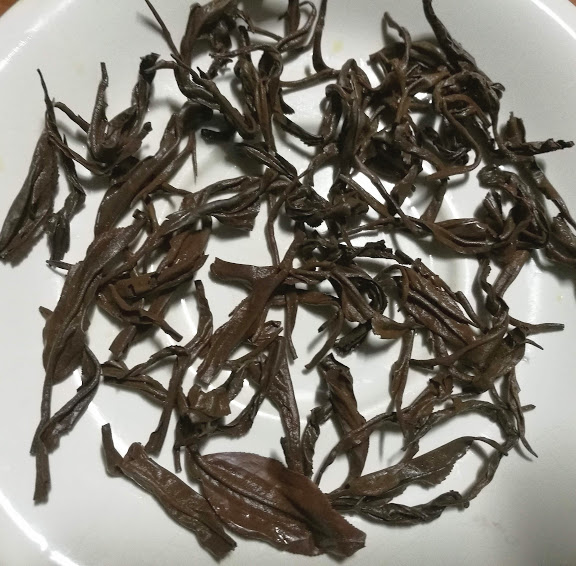
Tippier version left (per description), but they look similar


I've written about this general theme before, about protecting small farmers by arranging growing and processing co-ops to produce higher quality, organically grown, orthodox tea, and preserve farmers' way of life by selling better tea more directly, to increase created value and the proportion returned to them.  One might wonder, how is this different?

It sounds a bit like the case of Assamica Agro, or Assam Teahaus, the venture by Maddhurjya Gogoi, the tea producer / coordinator I met here in Bangkok awhile back.  I'd be guessing to venture how this initiative it is different, but I will do that.

I just met one of the main people developing this visiting Bangkok, Jaba Borgohain.  I didn't see any web page references for the producer these are labeled under, Oiirabot, but Jaba's profile page did reference the Organic Assam Campaign.

Jaba is visiting the local university my family has the closest ties to, Chulalongkorn, my wife's former school, for an education conference event not related to the subject of tea.  The approach here is going to be for me to guess how these different ventures differ, and shed more light on hers, and then let her correct that by passing on more feedback in a later post.  The potential for adding some error is present, since I did just meet her for a few hours and talked some about this, after discussing it by message for a week or so.   But passing on an initial rough take is completely valid, as I see it.


To be clear these different ventures all are doing similar things in similar ways; I don't want to take away from that, or reject it.  The same is true of discussing this issue with Narendra Kumar Gurung related to Nepal, or that contact in the North of Thailand, Aphiwat Kokhue, or related to what Anna and William are supporting in Laos, through NGO development projects (covered lots of place in this blog, but last mentioned here, with links to follow).  This isn't about saying this project is somehow better or more important than those.  It seems unique, but only to a limited extent.  To me the general approach is great, and all of these initiatives sound uniquely promising.

Jaba is also trying to reconstruct past tea history, researching what was produced and how over the past, so that the end point isn't to produce Chinese style or fusion themed teas related to current market demand.  It's to produce the best possible tea using traditional sources and methodology, making some adjustments for optimizing results along the way.  She's not trying to import as much foreign processing approach or equipment as possible, or to change over types of teas being grown (again, all this is my understanding; maybe some retraction and clarification will follow).

These development themes always vary a little related to those sorts of focuses.  The work Anna and William are doing in Laos is more or less trying to bring Laos tea up to Chinese standards, for better versions from there, which would involve adjusting processing in relation to a foreign standard and type.  That's not such a bad thing, since those two tea traditions there are continuous, in an old form.  Probably processing has shifted to some extent over the last half a century in China (or improved over the last 20 years, as likely), but the style of tea hasn't changed as much as refinements have made best versions more universal.  Or at least that's my understanding.

Maddhurjya is trying to import Taiwanese tea production equipment (not just trying; he's done it); and probably is borrowing from foreign tea production styles.  That's also not such a bad thing.  A vendor in Indonesia related how they were going for a complete fusion of tea plant sources, processing steps, equipment use, and final styles outcome (Toba Wangi, with a vendor profile here; those teas I tried from them were great).  I can relate to why some people would appreciate the native-approach theme a lot more, but it's not as if it's the only valid starting point or input.

The tea itself will tell some of the story about how results go so far.  And Jaba can correct what I've said that's a bit of a miss, or fill in more details.  I'll let the package description add more background, to clarify that I'm not just re-interpreting discussion points as ran across them:

Handmade Tales is a specialty tea brand of Oiirabot, a tea enterprise based in tea city, Dibrugarh, Assam (India).  Oiirabot specializes in handcrafted chemical-free premium teas, cultivated in remote regions of Assam.

Oiirabot works in close colaboration with the small tea growers of Assam to create premium quality tea varieties and promote chemical-free tea farming among the tea growers of Assam.  Other range of premium tea products under Handmade Tales:

White Tea
Blue Tea [so oolong?]
Bamboo Smoked Tea [she passed on some falap / phalap, which I've never yet tried]
Green Tea with Silver Tips
Black Tea with Golden Tips
Assamese Traditional Smoked Dheki Tea


I didn't emphasize that organic theme, even though she and I talked a lot about the pros and cons of certifications.  In short I had told her that doesn't seem to be a primary selling point in the US, even though it is definitely a practical concern people are very aware of.


Review:


I'll prepare these Gongfu style, even though the package lists Western brewing suggestions.  It's my understanding that relates to that approach being much more familiar, and more relevant to a broader audience.  People already using a Gongfu approach for black teas would have an idea of how to go about that.

I did brew these for much longer than I typically would sheng pu'er or most twisted oolong styles, for around 20 seconds.  It would work well to limit that to 10-15 seconds, but the stronger form would be closer to the results from brewing the tea Western style.  It will help with moving through the initial saturation phase, going slightly longer, and I can adjust timing based on results from each round based on results from the last (all standard stuff, really).

version with more golden tips left


Assam Black Orthodox Tea with Golden Tips:  that's really interesting.  You would expect malt to stand out most in any Assam, and it never really drops out for any version, but in this it's only one part of a broader profile, not dominant at all.  If anything a flavor range similar to sun-dried tomato stands out more, a rich, almost fruity sweetness that includes a bit of umami.  Nothing like that aspect framed in a seaweed or "greener" context in Japanese green teas, but I'm interpreting it as related. 

This isn't so close to any other tea style I've ever tried that I can use that as a clear starting point, not even other orthodox Assam.  One part reminds me more of Jin Jun Mei, that warm, honey-way sweet and rich range.  There's malt too, so that's different from those, but barely present in relation to the typical role that plays in Assam versions.  Cocoa joins those; that's more common with other Chinese black tea range.

It's nice, just a bit shocking to experience so much complexity at first, so removed from any expectations.  There's almost no astringency; it doesn't even have a dry or rough feel, just fullness of body.


Assam Black Orthodox Tea:  presumably this is similar to the other but based on less tippy material, but that may not work to assume that.  It could be from a slightly different local area, made from different plant type sources, and processed differently; I just don't have that information.  Inputs are one thing and experienced results another anyway; in the end the tea speaks for itself.

This does overlap a good bit with the other version, only quite different for all the same aspects balancing differently.  Malt plays a similar but different role in this, or maybe it just comes across differently.  To back up and frame that, when you drink CTC Assam, or even better versions of orthodox Assam, it's typical for a blast of malt--in a very specific form--to define the experience.  Even when it balances well with the rest it still usually stands out as the single dominant aspect.  Not in these.  Related to good versions of Chinese black teas tasting a little malty these are comparable; it's still present.

It's as sweet as the other version, possibly slightly sweeter.  An aspect like sun-dried tomato is also present, that rich, warm, complex range, it's just not as dominant.  Cocoa and bees-wax (which I referenced as common with Jin Jun Mei) is also present, but again not as much.  Since it's just as intense as the other version it's hard to clarify what is filling in for the difference.  An underlying mineral structure may stand out just a little more, or a sweet version of dried wood tone, approaching that of bark spice, but leaving off where dried sticks tend to smell.  Or that could be tied to a version of tree bark, but only a very specific type, not the full, thick bark of mature hardwood, or the lighter, mineral intensive nature of peel-bark trees (aspen or birch), but instead a thin, dark bark common to other ranges of tree types.  Maybe "like sticks" is clearer than all that.

Related to feel this has a different kind of structure, a hint of dryness, but it's not astringent.  Malt in Assam usually seems somehow connected to a dry, structured feel, but these are a good bit softer and fuller than that, or "rounder" if a more vague, graphic comparison helps.

Right out of the gate these are on par with or possibly even better than any other Assam I've ever tried, and I've explored that range a bit.  Usually newer producers go through a "dialing-in" phase while they work out removing obvious flaws, but they're onto the next step already, optimizing results.  I was surprised that Narendra seemed to jump over that step in making Nepalese teas too. 

I think both may have been successful for a common reason; they're really not new to it, at all.  Both sets of producers (farmers, who also produce tea) were probably making pretty good tea before, and did go through some adjustment phase I wasn't in on testing, but were able to rush that process for starting out further ahead.  External input could also be a factor, as in William and Anna's case, drawing on one or more good reference sources.  Anyway, the teas are nice.

Second infusion:


I went fast on this second infusion, around 10 seconds.  That will soften mouth-feel even further, which wasn't necessary, but I'm curious about how the flavors and other aspects work at a light infusion level, around how I prepare a lot of Chinese teas.

Golden tips black (leaves and tips, the tippier version):  more of the same, only slightly lighter; it's not really developing to change.  That sun-dried tomato range umami effect is interesting; that just doesn't come up much in any black teas.  It's pleasant, just really novel.  An optimum infusion level (intensity) for this would be brewed for longer, as I expected.  It's interesting that the tea has reasonable thickness of feel, even brewed lightly; even some aftertaste effect occurs.  That mix of sun-dried tomato rich sweetness, bees wax, and cocoa is quite pleasant, with hardly any malt filling in for balance between an earthy and mineral range, but just a touch.

Someone looking for a blast of malt in this tea would be disappointed; for being more on a Chinese-black style range it works really well.  It's odd saying it but this probably wouldn't be ideal for making masala chai.  It's one of the better Indian black teas I've tried, so that's not really a natural connection anyone would make anyway, considering how simmering this with spices would work out.


Orthodox black (just less tippy):  this does transition, or maybe it's that it comes across much different at a lower infusion intensity, while the other just seemed lighter but with identical aspects.  I get a sense there's something I'm missing in this description, some way of portraying what it's like in a clearer way I've not considered.  It also contains a faint bees-wax aspect, and limited amount of cocoa, and a faint trace of malt, maybe just a little more.  Then there's a wood tone that's different, closer to tree bark or bark spice than fresh or cured hardwood or pine, nothing like those ranges.  It's not like forest-floor either, nothing like autumn leaves, or wetter earthier range.  Maybe leather, that sweet, rich smell from a bomber jacket, leather bound book, or baseball glove.  Framed within the rest of the complex flavors I'm not sure which it's closest to.

The feel has a hint more structure and dryness to it.  You can't really pick it up within the flavor range but it seems like maybe a touch more mineral (warm-toned mineral) is supporting that other mix, and that's why it comes across as complex in a different way, and why the feel character is different.  Or it could just be the malt-tone is different, but it's light enough in these that it's hard to break down.  A stronger infusion will help with identifying that difference.

It's a little known fact that Assamica plant types produce more caffeine than variety Sinensis, one of very few uniform inputs that identify a difference.  The other is that younger leaves and buds contain more caffeine as well; beyond that it just varies by case.  These teas really hitting me reminded me of all that.  For being two infusions in I'm feeling that caffeine.  Maybe some of what people write off as "tea drunk" in young sheng just is that.  Only some; I get it that people are having semi-mystical experiences of different types, not just caffeine buzzed.

Third infusion:


These I brewed for 20 seconds this round, twice as long as the last time.  I'd expect the teas to only produce a half dozen or so infusions using these longer times, or maybe 7 or 8 with stretching out long-brewed late rounds.  They will probably require longer infusion times by round 5 or so to keep up intensity, and will transition in aspects quite a bit by that or the next infusion.  All just guesses; interesting trying to see how teas match my expectations, or don't.

Tippier black:  intensity is back up but only in a normal range; these may be fading just a little already.  It doesn't help using up a lot of time between rounds to write, because in effect I'm letting the tea leaves cool, which cools the water I pour onto them.  Again that sun-dried tomato umami stands out, with the rest of the list as I had described.  It may be edging towards slightly earthier and slightly less sweet.  The cocoa and bees wax may be on the way out, with a mild dark wood tone picking up, closer to the form of the other, but not really the same.


Orthodox black:  the feel of this is quite different; astringency really did ramp up.  It's nowhere near the level of a CTC tea, or maybe even a more standard orthodox black range, but compared to both in the first two rounds it's considerable.  If anything the other tea lightened in character and feel, the opposite.  That stronger edge draws out more of the bees-wax impression, with malt tone picking up quite a bit; now it really is a main aspect, just not yet a dominant one.

The slightly dry feel that is common to Assam tea is more present, the structured feel / body that comes across that way, versus Chinese teas being softer (or often Darjeeling too, for that matter, but those vary a lot, covering many pleasant forms and aspect combinations).  This is probably the only infusion of the six I've tried that would be familiar to people drinking "more bold" and more typical forms of black tea.  Boldness seems to imply some degree of value judgement, and "briskness" overlaps with that a little, relating more exclusively to feel instead of also flavor.  I tend to not use those terms because to me they're not descriptive enough, and try to describe actual flavors and feel aspects instead.  But they could definitely be meaningful; it's a matter of preference of terms and convention.

Fourth infusion:


This might be a good place to leave off given that 8 small cups of tea prepared like this is a lot.  I'd expect that the story of round 5 is about how these transition towards the finish, with how durable they are to produce lots of consistent infusions more relevant than how that final transition sequence plays out.  It is nice when some Dian Hong (Yunnan black, my overall favorite black tea type, or range, as it works out) are still very positive in later round forms, so that stretching out 2 or 3 late rounds is still nice to experience.  You get more experience out of your tea that way.  It's more common for all black tea types to stay positive for a shorter run, to fade to become woody or something such.

Orthodox with golden tips:  this is thinning a little further.  The richness, round feel, thickness, and overall pleasantness is still present but it's fading.  A longer infusion time would bump that next round.  I'd expect that's not how the other version goes, that it's just changing form more, not intensity level so much, based on the last round.


Orthodox black:  it might be fading a little, but not like the other version.  It still has that astringency edge, although this is brewed too lightly for it to feel rough, it just has structure.  The balance isn't quite as positive as it had been, the level of flavor in relation to that feel aspect, and related mineral / malt flavor tones (seemingly related; maybe they have nothing to do with each other, and I'm adding the association).

This is much closer to other forms of orthodox Assam I've tried, as it comes across this round, which isn't necessarily a bad thing.  Those usually break into two sets of character types, as very intense and malt-heavy, and much thinner and softer and more subtle.  At a guess harvest season timing may have caused that as much as any other input, spring teas (the more intense versions) versus those harvested and produced at other times.  Of course that's just a guess.  Darjeeling second flush is just as intense as first, just different in character, related to picked leaf characteristics and processing differences.  I'm really not familiar enough with Assam "flushes" or harvest seasons to speculate, just mentioning the obvious, as I see it.

It seems like one more slightly stretched timing round would tell a more complete story, and since I'm just buzzed versus blasted on caffeine I might as well go there.


Fifth infusion:


These brewed around a minute, plenty of time to draw out more infusion strength, just maybe a bit much for the second.

Black with more golden tips:  the aspects are a bit more subdued but in the same range as earlier, just leveled off a bit.  It's still very positive, not picking up astringency, heavy mineral tone, or any woody flavors, still just as sweet, mellow, complex, and balanced.  Given how subtle this has become it might only work to run two even longer infusions, since it's staying so positive, with that seventh one pushing it a bit.  I never compared the flavor to honey, but I guess it went without saying that saying it tasted a bit like bees wax overlapped some with that.  This is more like honey than that bees wax now, which is also very pleasant, just subtle.  The sun-dried tomato flavor range dropped out (earlier in the rounds, really), leaving other warm, soft tones, closer to cocoa, but not branching into being woody.

I never did mention that although these two look kind of similar the character of this version is much closer to that of golden tips or buds-heavy tea versions.  That content difference must be right; both the label and corresponding character match can't be wrong.


Orthodox black:  the tapering off of intensity is in a positive place for this version too, with aspect balance a lot closer to the other than I'd have expected.  This has more astringency now, and malt is more pronounced, but the honey sweetness and soft, rich tones aren't as different as they had been.  The feel in this has more structure, at this point, but the other isn't thin, even for becoming lighter, it's just not as thick as it had been.


Conclusions:


This already covered what I thought of the teas; they were really good.  It's tempting to say that they are better than the other two sets of versions of orthodox Assam produced by small co-op producers (Assamica Agro and Assam Teahaus).  It might be the case that I'm just trying a later, more-tweaked version of these teas, that from 2 to 3 years ago when I tried those others the ones made by this same producer wouldn't have been quite as refined.  And those other two producers may have made quality gains since then, and adjusted to make new types; in fact, I'd be surprised if they hadn't.

It's a little odd that all three seem to be on such closely related time-tables.  I don't think any of them were doing anything remotely like this 4 years ago (or maybe it's 5 instead, but I think it's not), and they've covered a lot of similar ground fast.  I like this individual theme, the idea of going back to earlier, traditional forms of tea, versus fusing other production methods along with what was already done.  Optimization of both may follow similar patterns; the outcomes may be more similar than one would expect.

This is only the beginning of this description.  I have one more green tea to try, and I want Jaba to help adjust what I've said to make it more detailed and accurate.  She has also been researching the history of tea in Assam, which can confidently be re-written from the present form based on citing clear and reliable text references.  I'll leave that part as a teaser, and won't share what I've already heard about that.

Jaba is here on a academic conference visit, related to a subject other than tea.  That's interesting to me, how people can bridge experience and strengths from other backgrounds and discipline to inform tea investigation or development.  Of course the tradition she is a part of, was born into, also related quite a bit to agricultural themes, and traditional tea production.  Academic research does open the door to exploring history in a different way, though.  Probably not in any way that made this tea as good as it is, but it's still an interesting sub-theme.

More will follow across those different scopes.

meeting Jaba at Jip Eu, my favorite shop, along with Ralph, from Germany


visiting Wat Pho, a main Bangkok temple


the main ceremony hall Buddha statue there


Tuesday, February 19, 2019

Placing sustainable, forest-based tea agriculture


I've not met up with Sasha Abramovich or Nok recently, and I finally did again this past weekend.  A local tea celebrity of sorts dropped by, Kenneth Rimdahl of Monsoon teas.  I'll say a little about what we tried and then run through some news related to Kenneth.  He's been doing a lot with a sustainable, forest-friendly tea sourcing that's the main theme here, with just a little on that meeting covered first.

a first outdoor tasting trial awhile back, last year


Tasting tea and hanging out


Sasha brewed two Tea Side teas for us, a 1980 sheng (reviewed here) and a 2006 sheng (re-reviewed here, in comparison with what turned out to be a different 2006 HTC Thai sheng).  It was interesting trying two teas I was already familiar with in a different setting.  The second tea is the first aged sheng cake I ever bought, so I have some at home, but I don't drink it often.  It's nice tea.

Sasha also brewed a few nice sheng samples from Tea Dee, commissioned or shop-produced tea versions that represent the best respected tea shop in Bangkok, owned by Khun Zhang.  Double Dog is as well known but for being a Chinatown cafe, and they also sell tea, but no other Thai business comes close to matching that shop's local reputation related to pu'er.  Oddly I've only visited them once, in a location that has since moved (now in Thanya Park), because that shop is way out towards the airport from where I live and work in the city center.  There's a nice park out there we visit once in awhile, Rama 9 / Suang Luang, but I never get my wife to agree to add tea shopping to the list of days' activities when we visit it.


view from their apartment; that's Benjasiri, the park in the last photo


Not much of a review of teas we tried so far, but I didn't intend for this to go into that.  There's more I could say about the Tea Dee cakes but it would only be a general impression due to writing this days later.  They seemed different from each other, generally sweet and floral in different ways, and like quite good tea material.  They didn't seem to be made in a drink-right-now modern style (more traditional instead), but not overly bitter, astringent, and unapproachable.  They seemed to represent tea that could still be a good value even if selling for over $100 per cake when "young," before aging; that's probably saying enough.

Kenneth brought a couple samples of interesting Ceylon / Sri Lankan teas.  I probably shouldn't say more about one that seemed unique in style and appearance since it represents a work-in-progress for a new product development.  A second (green tea, I think it was) was unique for being able to change color, to switch from the pale gold that green teas are to pink with a little lime added.  That transition capacity is familiar from blue pea / butterfly pea tisane but I've not seen actual tea that does that, until this one.  I definitely like green teas the least of any broad category but that tea was fine too.  The black tea version was a good bit better than "fine;" it was quite nice tea, and not exactly like other better Ceylon I've tried in style.

Onto news about Kenneth then, which does skip a lot of what we discussed that day, and how it went in general.  It was a nice outing.  We drank too much tea but I sort of saw that coming and only tried a couple of tisanes with breakfast.


Kenneth and Monsoon update


Monsoon opened a Bangkok branch around three weeks ago.  I've seen news related to that, but just didn't get around to visiting there or mentioning it here.  It's way out in the South-East of town, not as far as Tea Dee, but closer to that than to city center, my job (the main site), or where I live.  The second main site for the company I work for (not related to tea; the subject is a hobby interest) is actually out in Bangna, on Bangna-Trad road.  It's even further out than that Monsoon shop, and a ten minute drive from Thanya Park (but I use the sky-train here for commuting).

Monsoon's primary theme is selling tea blends, with a focus on Thai-produced forest-friendly tea.  I reviewed a white tea version a couple of years ago and that was nice.  Kenneth talked about that at a TedX talk a year or so back, and the Bangkok Post ran a story on him and the forest friendly tea theme

On a related subject, I ran through details of a different type of related sustainable-production initiative carried out in Laos in this post (which reviews two local tea versions), with a website of the related participating NGO covering more details.


Laos wild tea, photo credit ComitĂ© de coopĂ©ration avec le Laos website (used with permission)


I have mixed feelings about this forest-friendly theme, and the background can be a bit complicated, so that I'll say more about all that here than I did about trying 8 or 9 novel teas earlier in the post.  Kenneth is nice, and he seems genuinely concerned about that sustainability concern; at least that seems to be a good starting point.


Forest-friendly sustainable tea production


Let's get the reservation and potential problem out of the way first:  this theme is at least in part a marketing approach. 

Teas really are healthy, but when a vendor promotes how healthy a tea is they trying to make a sale based on ideas that aren't usually as well-grounded as they represent them to be.  I think there is a good chance that green tea is good for cardiovascular health, and there is some research evidence supporting that, but when a tea vendor makes that claim it comes across more as sales-pitch than them trying to be helpful and informative.  I don't drink green tea much anyway; I don't like it as much, and other versions would overlap in terms of beneficial compounds present.

Some of that type of concern probably applies here.  A complete critique of how the factors are likely to balance isn't possible, self-interest based marketing versus broader-interest based sustainability focus.  It is possible to run through my take on how "real" I think this particular sustainability theme is, so I will cover that.

It's real, but it's not an important factor if the consideration is limited only to being related to tea in Thailand.  Let's back up and examine why I think that (and note that it is only my impression, to an extent).

This 2008 research reference offers us a dated snapshot of tea production in Thailand:


This 14 year old production summary converts to a total land space of 75,076 rai used to make tea.  That converts to 29,600 acres, or 47 square miles, an area of 6 miles by 8 miles.  It's a good bit of land, but essentially nothing at all compared the land used to grow rice, fruit, or palm oil here. 

Let's check on that and use the latter (palm oil production) for comparison:

According to this reference there are (as of 2015) approximately 700,000 hectares of land in use in Thailand for production of palm oil.  That equates to 17.2 million acres.  Put another way there is 58 times more land in use to produce palm oil than tea in Thailand.  That's based on these numbers; tea production probably has increased, and I wouldn't be surprised if that palm oil estimate is on the low side, based on driving past palm plantations for hours in the South, lands that had been cleared of all native vegetation for that use.  The palm oil production growth and land-use are escalating much more quickly too, since the tea industry is probably quite a bit more developed and mature now, with demand leveled off, making it a lot more of a development concern, as shown by this reference:


That's happening mostly in the South of Thailand, related to what climate supports growth of that palm plant type best.  The general idea is that scale of tea production just isn't on the same scale as other agricultural production, so the risk for environmental destruction directly related to tea farming also cannot be.  For all I know logging impact may well be more of a competing concern in the North than other forms of agriculture are, and land-use study might not be as easy to pin down for that kind of thing.

That would seem to point back towards this being a good story that sells tea, a basis for presenting ideas through different channels to promote a business, but not mostly based on a real issue.  Not so fast though; there seems to be more to this, and it doesn't reduce to only being a factor related to tea.


Forest conservation as a broader trend


There are definitely competing interests that relate to land use and forest preservation; this much is clear.  Destruction of standing old-growth forests to produce tea may well be a relative non-issue, compared to the scale of other agricultural-use concerns, but preservation of those forests definitely is an issue.  Thailand, like most other countries, has set up environmental reserves and protections that tie to a broad range of concerns.  I highly recommend reading this background summary on Forest Management in Thailand, prepared by the International Forestry Cooperation Office, a branch of a government protection agency that also involves Thai Royal family support.  Their summary outlines the current status and goals:


...There is no doubt that remaining forests need to be protected and that deforested areas need to be replanted. Moreover, there is no disagreement that local people must be involved in conservation efforts if they are to succeed...

...Forest resources provide a multitude of goods and services, including pulp, timber, nontimber products, medicinal and edible plants, as well as other raw materials such as rattan and bamboo. More than 1,000 recorded species of plants contain medical properties and 30,000-40,000 households harvest them on a full-time basis. Furthermore, 60% of the rural population or roughly 30,000 communities living near forests rely on edible plants for their daily needs and more than 500 species of these plants are sold in local markets throughout the country... 


The past history and regulatory efforts in place described in that short work are too detailed to summarize here, even in citation sampling format like that.  One general theme meets back up with what Kenneth is promoting related to tea:

...Communities located within and near forests have been motivated to participate in the sustainable management of natural resources through well designed conservation policies and legal frameworks, especially those pertaining to forests, which have been amended to address rapid social change and emerging environmental issues...

...Thailand, which once exported timber, is now a net importer and has high expectations of the role forests will play in nature conservation. Since 1989, all natural forest (25% of total area) is protected by law from commercial exploitation...

...Community forests in Thailand are classified into two types: natural and rehabilitated or developed. They can be established on three categories of land: national reserved forest or public and overgrown areas; land under the jurisdiction of other government agencies (e.g., monasteries, educational institutes, military areas); and private locations.

The first type consists of natural forests where people in nearby communities join together to protect them in order to benefit from their productive capacity and to maintain their norms and culture... 


I'm sure that there are functional programs and other initiatives in place that support sustainable, natural-growth land use, even beyond what is described in that reference.  At the same time the more that minimal impact land use can enable economic development the more effective and functional those programs will be in practice.


One additional context detail:  the tea is already there


This part I almost left out, as familiar ground to me since I've been reviewing this relevant background for a couple of years (based mostly on input from Kenneth, and also other sources prior to talking to him), but it wouldn't be familiar to many.  The tea plants are already there, essentially growing wild.  Tea was introduced into areas in Southern China, Myanmar, Northern Vietnam, Laos and Thailand well over a millenium ago. 

Which forms of the tea plants are the most original and native, and the role people played in distributing them are debated, but the consensus take is that wild forms of Assamica (one of two varieties of Camellia Sinensis) first originated in Yunnan, and that movement of the plants to a broader region was probably helped out quite a bit by people.  Thailand was settled by waves of people from China and other places extending back well prior to known history.

It's really something of an unrelated tangent here, but I'll include a citation about the plant-history of tea that relates, and a link to support further reading:

The tea plant was initially domesticated in China over 4,000 year ago (Yamanishi, 1995)... 

...we calculated China type tea and Assam type tea as having first diverged approximately 22,000 years ago, and Chinese Assam type tea and Indian Assam type tea as having diverged from each other approximately 2,770 years ago... 


There is a lot more to that story.  The short version:  tea plants are there, growing relatively wild in the North of Thailand, almost certainly put there by groups of people who aren't well-documented by a known history (but some pre-history is described here).  Kenneth emphasizes that earlier use relates to miang consumption, to practices of eating tea that are common to those in Myanmar (and in Northern India, I think?), and probably other places.  I'm not sure if eating tea really did pre-date brewing tea, locally or elsewhere, or if it's possible to place the two in relation to each other as regional traditional practices over a long time-frame.

Deeper detailed history aside, what I'm trying to summarize here would seem very odd if the idea was to plant some sort of community farms inside forested areas, versus using leaf material from plants that are already growing there (the actual case).  If these forests are destroyed for alternate use, or perhaps even just used for logging (depending on tree-harvesting process used), many of the tea plants and other useful bio-diverse plant-life might be destroyed.


Onto conclusions


It might seem like I'm concluding that every little bit helps, and that what Kenneth is promoting is one small step in the right direction, joining other government initiatives and land-use themes.  That seems at least partly true, if potentially a bit optimistic.  Not all government programs are effective at achieving intended goals, and I'm not sure how much economic benefit "wild" tea development currently has on such concerns, or what the future potential is.

All the same these ideas map together in an obvious way.  The theory and broad government-control directive requires other steps and drivers to support it; that much was cited here in that Ministry of Natural Resources and Environment summary.  It's not "sustainable" in one deeper sense for only government restrictions and NGO monitoring and education efforts to prevent high-impact forest land use; a positive economic driver could potentially also play an important role.


Is it better for the Thai natural environment to buy Monsoon wild-grown tea instead of plantation-produced oolong?  Maybe a little.  There wouldn't be a significant effect from that personal choice on a small scale but to some extent the small inputs would "roll up."  I suspect that Kenneth and Monsoon's efforts round down to making no difference taken alone, but that all such forest-use initiatives considered together are a significant factor, and one that can potentially be extended. 

To me this leads directly on to considering other factors.  If you buy a tea blend sold in a small tin, what about the pit-mine impact from producing that metal, versus use of some other type of packaging?  The mine for the metal ore might be in Laos, with the packaging production in China, and the likely end point for the tin as a landfill in Thailand, with transportation related impact all through those steps. 

This is part of our current set of challenges; sorting out which inputs and causal connections really do make a difference, and identifying how to maximize the cumulative effects of our choices.  It starts out as simply as choosing paper or plastic bags, or deciding to carry re-usable cloth bags instead.  If one person's choice in some regard extends to a factor of a thousand times more impact than which tea source they choose then more focus is better directed there.

In conclusion, how much difference this really makes is hard to place.  But it is one representative part of a very important subject that does need to be addressed.  Probably palm oil farming represents a real land-use issue that needs to be considered and monitored at a national level, more so than tea production.  Of course China is destroying natural areas much faster to ramp up tea production there, because tea is a much larger industry there.


clear-cut tea farming (but not in Thailand or China)


It would be nice if personal beverage choices could make a marginal difference in long-term land use in Thailand.  To some limited extent Monsoon products represent that potential, whether that is actually the main driver for their sourcing framework or not.  I think Kenneth's intentions are good, but of course businesses also need to be profitable, so goals tend to mix.  If profit is motivating this development and natural-growth forest preservation and use is also being supported then it represents a case of multiple forms of values matching up.

For me personally I try to remain skeptical about claims and background descriptions made about tea across a broad range, but also stay open to new ideas, and remain somewhat optimistic.  Drinking a different version of tea won't make much difference, but helping make a little difference could reasonably be experienced as a positive thing.


Friday, August 10, 2018

Assam Teehaus Spring 2018 black tea review


I tried another orthodox Assam version from Maddhurjya Gogoi, that Sasha passed on when I met him a couple weeks ago (from Assam Teehaus).  I've tried a couple, and it's hard to keep track of which one is the absolute best, or how different the batches are, so I'll just go ahead and review the one I got around to writing about.  It was good tea.  "Good" means a range of different things, which is where these wordy tasting notes come in.

I just re-read a post about trying a 2017 version a month ago.  This description is pretty close in general type, just a little off on a detail or two.  I can't say if it sounds better or not; when a tea is kind of similar you really need a side-by-side tasting to help sort that out.  For some types you can base a judgement on a couple of specific attributes, which will make it clear in your memory where you thought it stood for quality level and match to preferences.  These Assam Teehaus teas are pretty good quality overall, with a limitation of being a little non-specific, of mixing a lot of aspect range instead of being as narrow in character as some types.

I haven't described the tea yet, but in a sense all the complexity that I will describe almost comes across as a blend, with some clear common aspect threads through that character.  From what Sasha and Maddhurjya mentioned this may stem from an interesting input: the teas are made from locally sourced plants, so they know the farmers and growing conditions, but a limited variety of tea plants have grown alongside each other.  The tea plant source itself isn't based on monoculture, in terms of growing alone (only tea plants), or in the other sense of being made from a very genetic-specific plant version.  The "terroir" or growing condition inputs are relatively uniform but plant genetics vary. To me that's cool, and surely is a factor that changes the end effect.


This Halmari orthodox Assam version works as a contrast to that.  As a standard plantation tea they would control growing inputs and plant type very carefully and completely, achieving a much more uniform outcome, and a narrow set of aspects.  In general that's a good thing, especially since it can correspond to an experience of aspect intensity.


More than one being better though the two types of tea are different.  That Halmari version really did express a much sharper and more pronounced form of malt, which did come across as the main flavor aspect.  Some of what the Halmari version gained in perceived intensity in a limited range it gave up in terms of losing complexity of flavor. 


For some people the softer, slightly sweeter and broader flavor range in the version I'm reviewing here would be preferable, and for others it might not be nearly as pleasant.  I think Maddhurjya's teas are improving, so while I might have said Halmari's are just better last year--beyond being different--now that's not quite as clear now.

The detailed description will fill in what I mean.

Review


The tea is really nice, complex, sweet, layered, and pleasant.  When people describe Assam as having really intense malt as a dominant aspect this isn't that; it balances a range of different aspects.  There is some malt to it but it doesn't stand out more than other sweetness, earthy aspects, and some dried fruit.  A warm mineral layer provides a base for the rest too.  Breaking all that into a more detailed description is a bit of a task.


A mild form of malt stands out as much as anything, but it integrates with the rest.  Usually that aspect pairs with an edgy astringency but this tea is soft, but with good body.  I've brewed it perfectly, for my preference for the type, using a really heavy handed proportion for Western style (probably more like 5 grams versus 2, but I didn't weigh it), and around a 2 1/2 minute steep.

nice to get back to simpler tea tasting

Next in intensity is fruit.  It's a dark, rich fruit tone that overlaps with earthiness, tamarind or fig (really dried tamarind; the "fig" is to help place that, for people who don't eat it).  Earthiness is hard to place; between a cured leather and aromatic tobacco.  The sweetness level and rich body really make it work, along with all those flavors being really clean.


I went a little shorter on the infusion time next round, to see how drinking it lighter changed it. The first thing that I noticed was that I used hotter water, shifting the flavor to add that one sort of dark toffee aspect.  That came from not prewarming the infusion device cup the first round, I think. 


It reminds me of that post on oolong brewing temperature, where a couple main themes emerged, so I'll do a tangent and talk through some of that (again related to oolong, but some ideas carry over).


Reddit's Tea subforum version (credit)

There was a split between the "always use boiling point" side and the lower temperatures you see on reference tables side, with almost everyone going with boiling point given where that took place (in the Gong Fu Cha group).  I think lower temperatures might work better for Western brewing but I agree that to get the most out of good oolongs you shouldn't do that.  Personal preference muddled there being one final conclusion, except for the "boiling point only" side.  I think using Western style brewing changes things, and I also tend not to go with that for oolongs, although it works better for rolled-style examples than for Wuyi Yancha or Dan Cong (in my opinion).


A friend made an interesting observation, that if someone is a cigarette smoker they would naturally want the most intensity they could get, which still even relates when brewing a tea very lightly, in this divide related to drawing out the one edgier aspect range.  As I take it there is a parallel in the difference between these first two black tea infusions; a slight edge showed up due to pre-warming the brewing device.  Or maybe I'm over thinking all this.


Again in this round the complexity is good, even brewed a little lighter.  The malt comes out more in this infusion, tied to different, richer mineral and earth tones.  The flavor is quite intense but the feel is still full but soft. It would be hard to screw up brewing this tea, and that rich, full flavor would go well with different kinds of food.  For tea enthusiasts into sitting and contemplating a dozen Gongfu rounds of refined, complex aspect tea that could be quite an insult to a tea, to say it's good with food, but then this style wouldn't be for everyone in a way that does seem to dove-tail with that factor.


For people moving on from lower quality loose black teas it would be perfect, and for more experienced tea drinkers it would just depend on the range they could appreciate. Not everyone drinks black tea, never mind individual styles.  I like it, but then I seem to appreciate diversity quite a bit, teas being pleasant in completely different ways.  Sometimes I do brew very subtle, complex, or sophisticated teas Gongfu style with breakfast, but more often I like something more simple that's going to work well as two or three mug-fulls brewed Western style, something I don't have to think about.

More input from Maddhujya


In the last post I mentioned some difficulties that Maddhurjya communicated having in ramping up orthodox tea production:  stable power supply, problems with rough roads, the typical difficulties with sales and marketing.  A lot of that would be common to anywhere.  He did comment on specific forms related to some of the issues in discussion, for example about the power supply:

The biggest challenge is paucity of electricity. The processing unit in our village is almost 1 km away from the Grid Transformer so we don't get proper voltage. And everyday there is power cuts for hours...... We were depending on a diesel fueled genset but unfortunately that also broke down at one point.


I asked him about the mix of different plant types.  That particular issue is interesting to me, not something that necessarily makes a difference in final outcome mapped to consumer preference until you really know a lot about it, but it's still interesting.  He mentioned the range of plant types grown at different sources they use, and which relate to this tea version:

We have TV1, TV9, Panitola 126, TiniAli 17, some wild seed variety and some vegetative clones.  The major input percentage for this tea version is Panitola 126, with Tiniali 17 and TV 1 also mixed in.


That definitely makes my review evaluation sound better, since I'd guessed a mix of plant types had been an influence on the character.  I tried to explain how I saw that to him in discussion, about how a narrow type or a broader input of sources doesn't necessarily seem better, but the outcome seems different (quoting myself this time; a bit odd, that):

Some Darjeeling and plantation Assam teas seem to have a very specific, limited aspect set output, probably through control of both narrow plant type sourcing and processing factors.  That gains something in terms of intensity and being novel, and gives something up in terms of broader aspect range and overall balance.  It's not that one is better than the other, they're just different.   To me it's not that different than a single grape wine versus a blend.  It's a trade-off; one isn't better than the other.  French people seem more inclined towards blends but Americans produce and drink both, only exploring and developing blends more recently.


Oddly I'm talking to someone about sheng just now and this all works in that discussion context too.  But enough with the tangents.

It's also hard to be clear on what differences the various processing step inputs make.  In particular Maddhuryja has been mentioning use of certain machines.  This comment doesn't shed that much light on the broad range but it does work for indirectly pointing towards some of it:

Our Taiwan rolling table is not like Indian rolling tables. The stainless steel used in the rolling table is FoodGrade Steel.  And it has copper teeth on the table to give its tight roll.


I guess these parts add up to what you'd expect for developing tea processing; there are lots of potential improvements to be made and lots of small challenges to hurdle.  The teas are quite good, and still getting better, so in that one important sense it's already working out.  They'll just need to keep making the growing, harvesting, and processing details come together, and ramp up the commercial side.

If any readers would like to play a more active role in promoting local, sustainable tea production this might be a good opportunity, by checking into buying tea from Assam Teehaus.  It's strange for a blog post to express marketing so directly, isn't it?  I think it might get by people that not only small vendors could order this tea, that anyone anywhere in the world could look up Maddhurjya and ask about picking up a kilo of it.  The numbers really wouldn't work out to buy 200 grams of tea from the opposite side of the world but as quantity increases a bit shipping is offset by lower per-unit cost.  This is all familiar ground for Yunnan Sourcing China customers, but I'm not sure how many higher quality Assam drinkers have explored this direction.


Oddly I'm going to be saying something similar related to a very small start-up tea producer in Nepal over the next two weeks.  Not the sales pitch part; the rest, about history and development status.  It's good to see sourcing options development move beyond people only saying they wish there was an alternative to multiple-resale wholesale supply chains and large corporation tea production.  Now there is.  But I don't think the pull on the demand side is enabling this to work well just yet.  Some things just take time, and sometimes multiple variables need to come together for a paradigm shift like this to happen.  It may be that small local retailers play a crucial role, even online versions of those, versus completely direct sales working out.  Time will tell.


with Kalani, dressed for a school presentation


wearing make-up for that event


posing at home beforehand